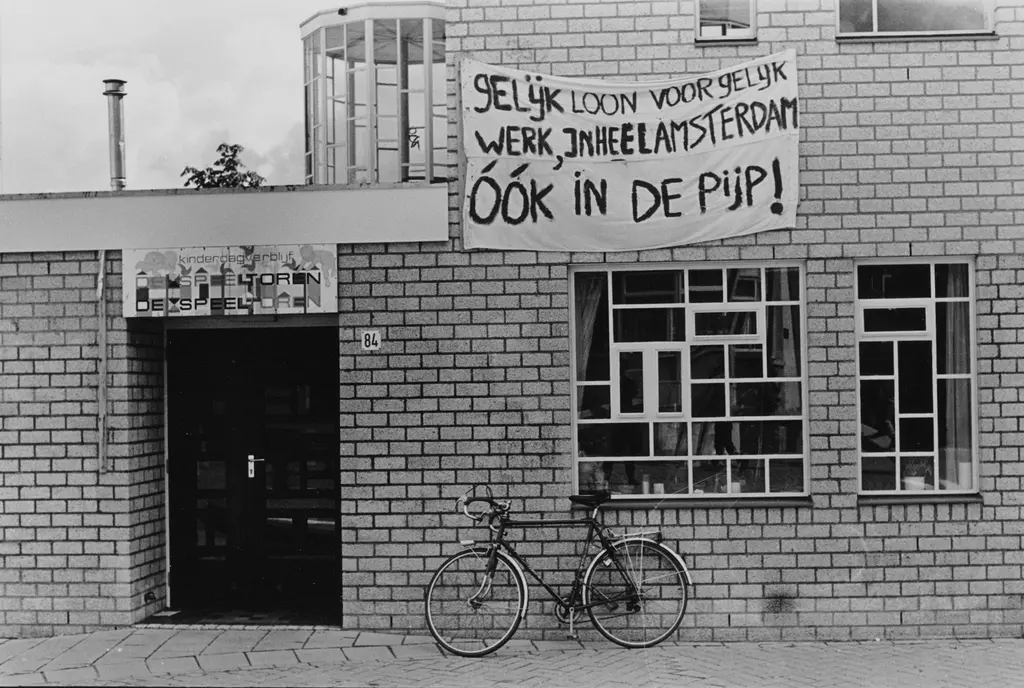
Although it has been illegal in the Netherlands since 1 March 1980 to pay people differently for doing the same work, this still happens. 24 November 2025 is Equal Pay Day in the Netherlands. From that day onwards, women symbolically work for free for the rest of the year. The idea behind Equal Pay Day originated in the United States and has been highlighted in the Netherlands since 2006.
Although it has been illegal in the Netherlands since 1 March 1980 to pay people differently for doing the same work, this still happens. 24 November 2025 is Equal Pay Day in the Netherlands. From that day onwards, women symbolically work for free for the rest of the year. The idea behind Equal Pay Day originated in the United States and has been highlighted in the Netherlands since 2006.
What is the pay gap?
The pay gap is the average gross hourly wage of all women in the Netherlands compared with the average gross hourly wage of all men. It is based on the salary before tax is deducted and before it is paid to employees. On average, women earn 10.5 per cent less per hour than men (Source: FNV). Women Inc. has calculated that, as long as the pay gap persists, women will each lose out on around 300,000 euros over the course of their working lives.
The ‘explainable’ pay gap
Part of this gap can be explained; one example of this is the difference in job role. Men are more likely than women to hold managerial positions with a higher hourly wage. The adjusted pay gap takes into account around twenty characteristics, such as employee characteristics, employer characteristics and job characteristics.
Women are more likely to work in sectors where wages are lower, such as healthcare or education.
The ‘mother effect’
A common stereotype of women is that of the caring woman. According to the American economist Claudia Goldin, this is not surprising, and the pay gap is caused by the so-called ‘mother effect’. According to Goldin, the impact of motherhood can be partly explained by the nature of today’s labour market. In many sectors, employees are expected to be constantly flexible and available. Men and women earn the same at the start of their careers, but women take on more responsibilities in terms of childcare and housework. As a result, women are more likely to work part-time than men. This has a negative impact on their careers and pay. Goldin conducted research into the gender pay gap and was awarded the Nobel Prize in Economics in 2023.
The ‘unexplained’ pay gap
However, there is also a part of the pay gap that is unexplained; this is also known as the unadjusted pay gap. This is linked to (unconscious) discrimination. For example, men who do the same work as women are often paid more. This is known as unequal pay.
Unequal pay
Unequal pay is prohibited by law. So why does it still occur in practice?
One of the reasons may be that pay is based on the last salary earned. However, the extent and manner in which pay negotiations take place also play a role. As a result, women are often placed on a lower pay scale than men. Another cause relates to persistent notions about the division of specific tasks between men and women. Gender stereotypes, such as the idea that men work and women (primarily) provide care, influence young people’s educational and career choices from an early age. This leads to a segmented labour market and widens the pay gap. Women are more likely to work part-time, particularly after having children; men, by contrast, are more likely to work full-time.
Atria’s report *Free to Choose? * (2022) shows, in particular, that young adult men are strongly influenced by traditional role patterns. We therefore recommend that gender equality policy should also be explicitly targeted at boys and men.
Furthermore, women’s work is valued less highly, for example in the care and education sectors.
How can we close the pay gap?
Through European legislation?
Directive (EU) 2023/970 was adopted in March 2023. This directive is intended to ensure greater transparency regarding the gender pay gap. Employees will then be able to see what their colleagues earn on average, and employers will be required to report on their policies to close the pay gap. Transparency is internationally recognised as an effective way of tackling pay discrimination. Several countries, including Belgium, France and Sweden, already have legislation in place for this.
The Netherlands is lagging behind in this area, but must comply with new EU rules by 2026 at the latest. A bill to this effect was tabled in the House of Representatives in May 2026. Employers will be obliged to use objective and gender-neutral systems for job evaluation and job classification. They will also no longer be permitted to ask job applicants about their previous salary during discussions on terms of employment or during the recruitment process. In addition, organisations with more than 100 employees must report periodically on pay gaps between female and male employees. The aim is for the measures to come into force on 1 January 2027.
Through certification?
Erasmus Q-Intelligence, part of Erasmus University in Rotterdam, offers to investigate any pay gaps between men and women within companies and issues certificates for this. If there are no significant pay differences between men and women, organisations are awarded an ‘excellent’ rating.
Does protesting pay off?
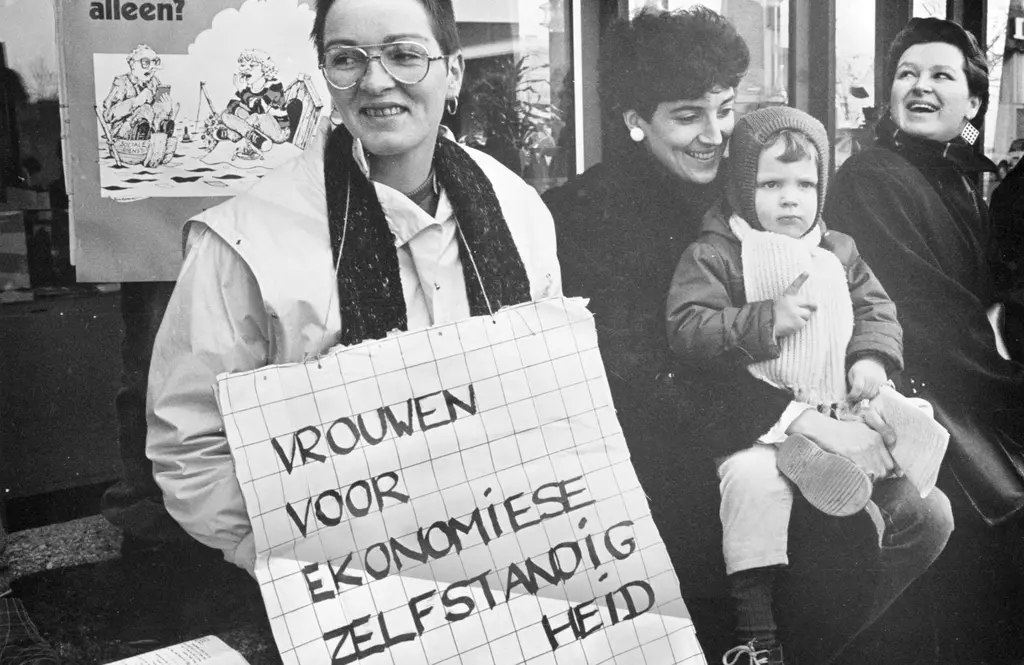
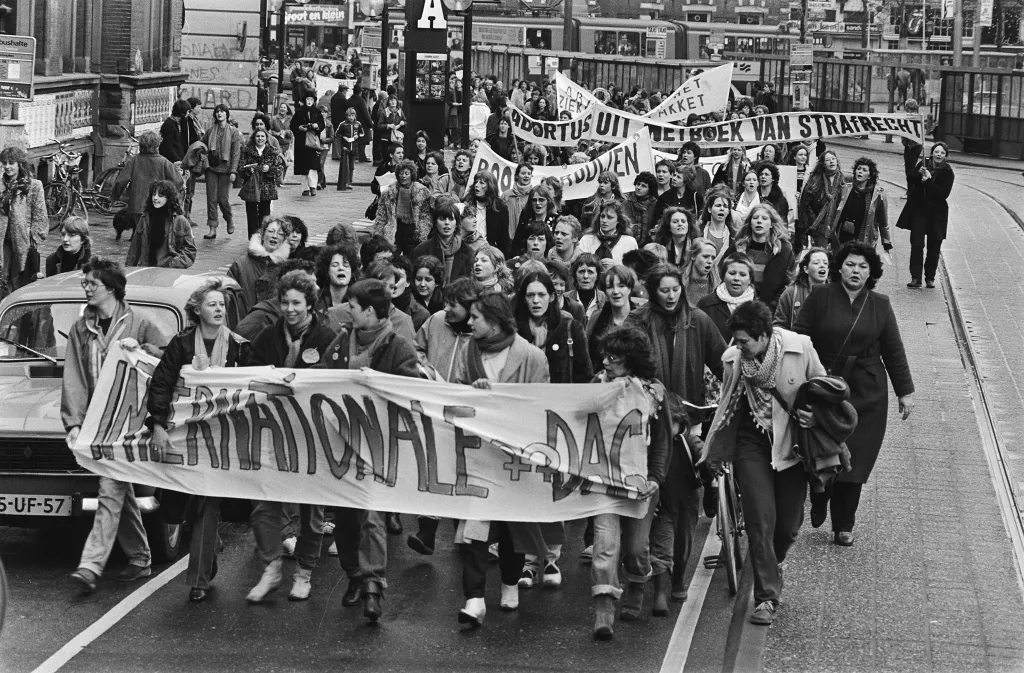
For years, women have been protesting both nationally and internationally for equal pay for equal work. On 24 October 2023, for example, women in Iceland stopped all paid and unpaid work for 24 hours in protest against the pay gap. In the Netherlands, too, attention is frequently drawn to this issue. In collaboration with the Equal Pay Foundation, Atria created a historical timeline of this struggle for the ‘I deserve more’ campaign in 2022, including:
1969: First ‘spontaneous’ women’s strike
In 1969, the female workers at the Champ Clark cigar factory in Nieuwe Pekela walked out. The male workers were paid an extra ten guilders a week, whereas the female workers were not. The factory management dismissed the female workers’ demands, arguing that men, after all, did heavier work. Nonsense, the women thought, and they decided it was time for radical action. The women in Nieuwe Pekela got what they deserved, and pay for the factory’s female and male workers was brought into line.
1973: Working women
In March 1973, the female workers at the Optilon factory in Winschoten went on strike to protest against unequal pay for their work and demanded the same wages as their male colleagues. The strike attracted national attention. The action group Dolle Mina, along with other feminist groups, declared their solidarity with the strike. Two months later, Dolle Mina launched the ‘Working Women’s Plan’. In it, they called for, amongst other things, equal pay for equal work, equal opportunities in education and employment, and free childcare. These demands remain relevant more than fifty years later.
It would be another 25 years before the House of Representatives passed the Equal Pay for Women and Men Act.