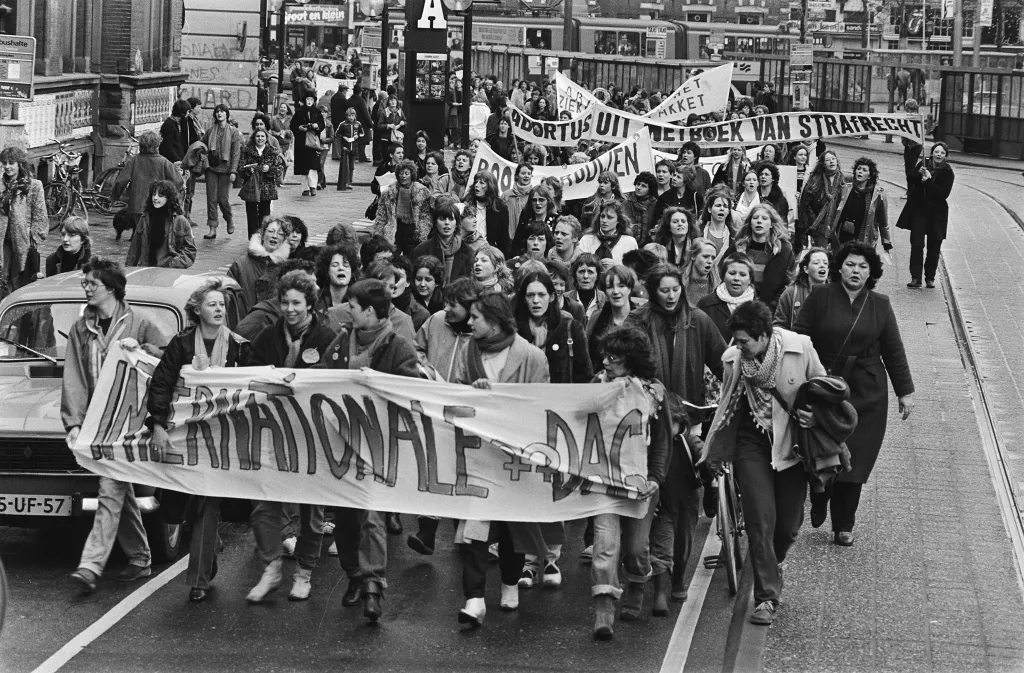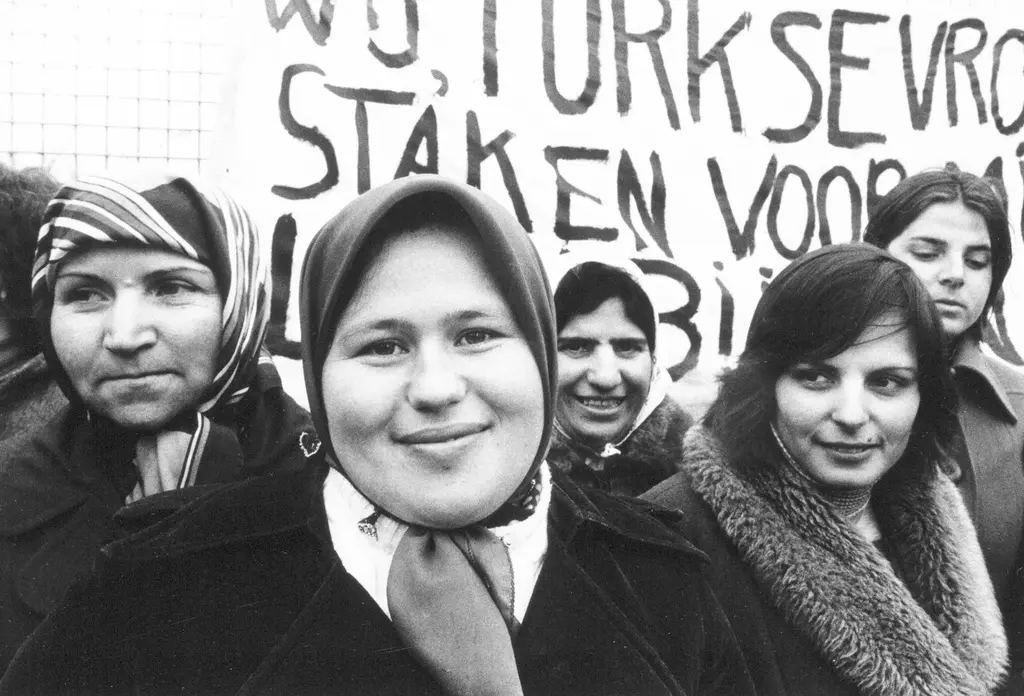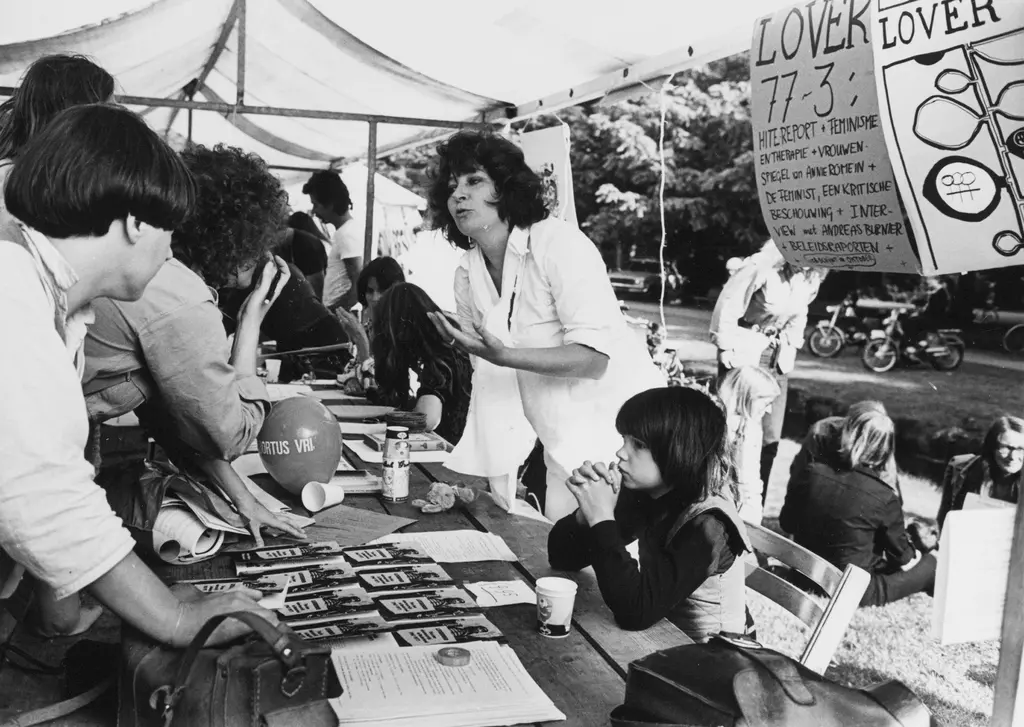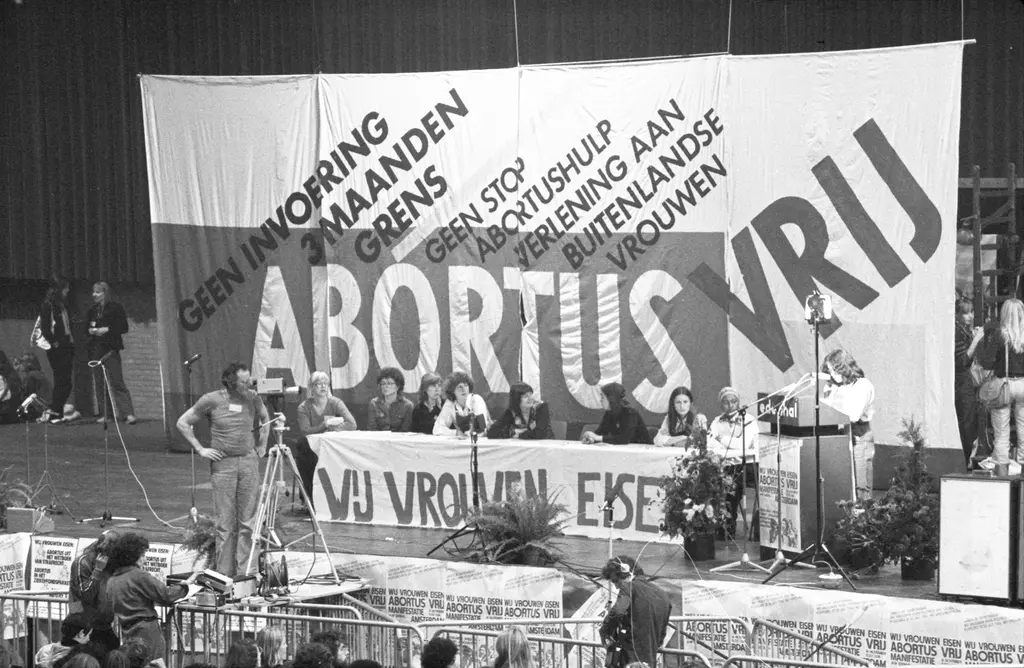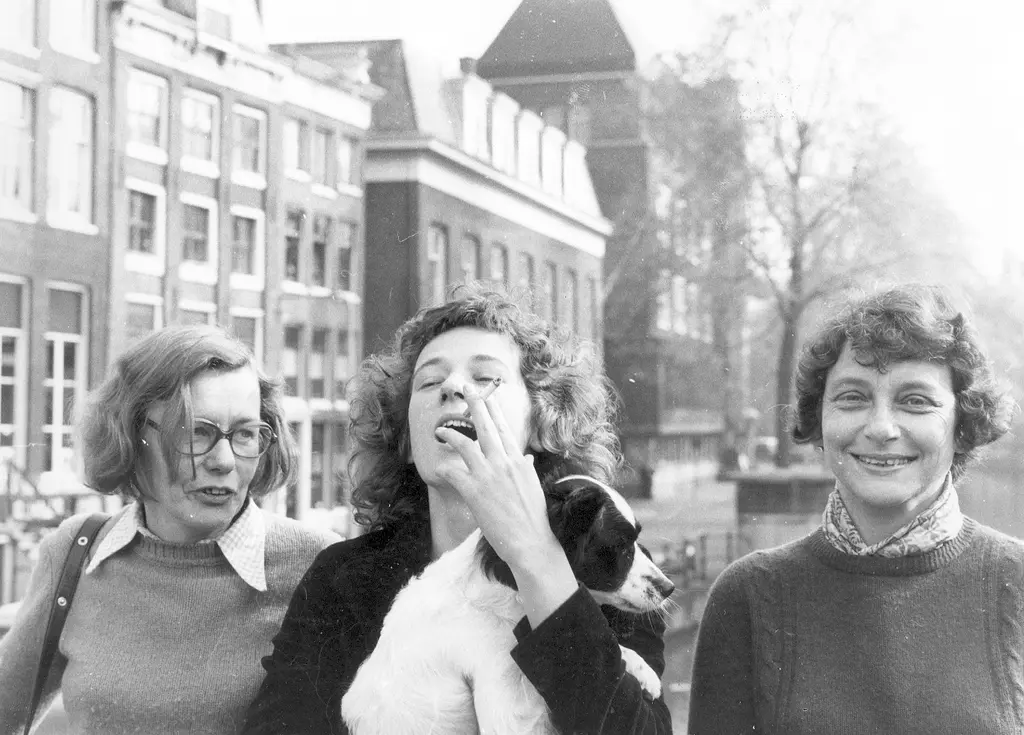
Self-care, selfies and self-made. There is a lot of focus on your position as an individual these days. And rightly so. It is good that celebrating yourself and being proud of your own achievements is given more space. The women of the 'second feminist wave' dropped the independent 'I' and fought together for an equal future. Discussing together, fighting together and, above all, resolving together. What is a collective and what is its strength?
Self-care, selfies and self-made. There is a lot of focus on your position as an individual these days. And rightly so. It is good that celebrating yourself and being proud of your own achievements is given more space. The women of the 'second feminist wave' dropped the independent 'I' and fought together for an equal future. Discussing together, fighting together and, above all, resolving together. What is a collective and what is its strength?
A collective movement
The 'second feminist wave' is marked by the founding of the political action group Man Vrouw Maatschappij (1968) and the playful action group Dolle Mina (1969). From then on, both men and women committed to improving the position of women. This does not work for everyone. Dolle Mina and Man Vrouw Maatschappij were blamed that within 'mixed' organisations, men were still in charge.
"So for the women's movement it was really a point to say: we're doing it now with just women, we don't need those men. And those men - who always take over, because that almost always happens - they don't need them for a while now. We are doing it ourselves."
For several groups of women, it is - to use current terms - time for a new culture of governance. Namely: a governance culture without governance. A group without leaders. Where everything is decided, fought and organised together. A group of and for women. It is time for a collective.
Brains and houses cracking
Many women's collectives originated in a women's house. Almost every major city in the Netherlands had one in the 1970s. Back then (as now), there was a housing crisis in the Netherlands. Squatting was the way to get a location for activist initiatives. The Vrouwenhuis on Herengracht in Amsterdam, squatted in 1973 by the Vrouwen Krakerscollectief, was one such place.
The Women's Houses were breeding grounds for various initiatives. Women came together to exchange experiences in women's discussion groups, received karate lessons or took the initiative to open their own café. Various collectives also emerged from the Women's Houses, each with its own goal or theme. Information was distributed through Women's Newspapers, "stencilled by hand: for 35 cents". Besides articles and stories of experience, the Women's Newspaper also had space for poetry, poems and prose.
Women's intention song
[...]
We are going to dishonour authority
We are going to learn a lot more
We are going to defraud banks
[...]
We are going to burp loudly
We are going to run pubs
We're going to demolish stadiums
We're going to make love to women
We're going to row on three-tonners
We're going to disrupt the family
We're going to start women's homes
We're going to take to the streets in the dark
We're going to protect ourselves with karate
We're going to fan fires
We are going to create unrest
We are going to
From: Women's newspaper, issue 10, 1974
Communicative collective
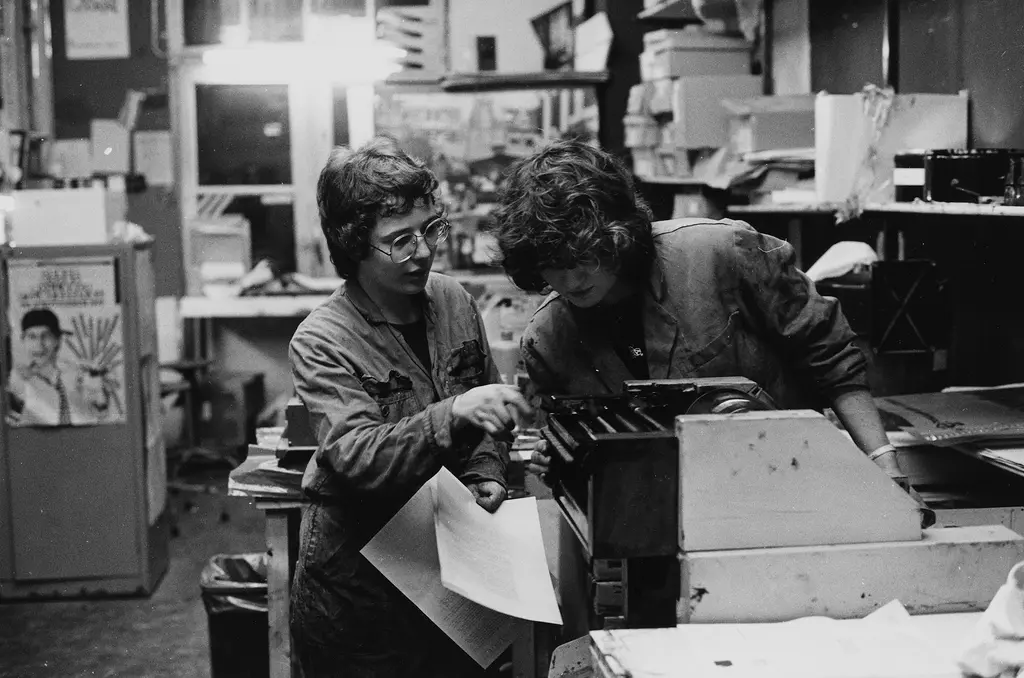
On New Year's Eve in 1973, four women toasted not only to the new year, but also to a new publishing house. At the Amsterdam Women's House, publishing house De Bonte Was was born. The founders knew better than anyone how crucial the media were in spreading their feminist ideas. They were not only creative but also inventive: with an old stencil machine and a pile of paper, they set to work.
As a collective, the Bonte Was decided not only to publish books together, but also to write together. Their first book is a collection of articles and experiences of women from different walks of life. Driven by anti-leadership, they write under a pseudonym. 'And they lived happily ever after...' appeared in 1974 and is about marriage and 'the expectations before and the disappointments after'. The book proved a great success, selling 20,000 copies.
More feminist publishing houses soon followed, such as Publisher Sara and Publisher Atalanta. The women were in control of the entire communication process: they wrote, printed and published what they wanted. They created a world where they themselves were the masters of the written word.
Inge from Haarlem and Rieke from Amsterdam's Virginia women's print shop printed the anarchist'Black Tarantula' in March 1980. The anarchist women's newspaper came out irregularly, had a changing national editorial team and each issue had a different name.
Collectively radical
It's not all cosy at the Women's House Amsterdam. Nor can it be. There are sometimes arguments and misunderstandings. Noor van Crevel is dissatisfied with existing organisations and action groups and starts looking for allies. Together with a friend, she places a contact ad in Vrij Nederland in 1971:
"2 girlfriends, fed up with the COC and other contact and reception options (contact you don't make there, reception is not our problem and anyway they do a male thing) are looking for women aged 18-95, with or without ideas, to come up with a hip and bright atmosphere."
The reactions are pouring in. Together with Nel Hermans, Maaike Meijer and Stephanie de Voogd, Noor van den Crevel forms the radical action group Purple September. After its formation, the first edition of their 'alternative women's newspaper' soon follows, bearing the same colourful name.
Purple September regards existing feminist groups and organisations as 'soporifics and palliatives' for maintaining inequality. They therefore interfere in discussions about patriarchy with a straight leg. Opzij also had to take the rap for it. In the third issue of Purple September, Opzij is crushed as "sham feminism". Moreover, the radical lesbian feminists accused the magazine of participating in the 'neo-capitalist system'. Purple September was loud and sought the boundaries, or sometimes crossed them on purpose. After two years of campaigning, they are done with it and in their latest issue they go bare-assed ('my ass'). They want to make room for new radical lesbian feminists.
Stay of my body
And Noor van Crevel? She is far from finished. Angry at the patriarchy and fighting to stop violence, she and five other women started the Blijf van mijn Lijf (Stay off my body) foundation in 1974. Without any government or municipal funding, Martine van Rappard, Anita Aerts, Betty Vinken, Marga van Rijen and Grietje Bosma joined Van Crevel in providing a safe refuge in Amsterdam.
'Abused by husband or boyfriend, you can leave if you want,' the first flyers stated. The foundation wanted to provide safe shelter for abused and battered women and their children. With the house, Blijf van mijn Lijf also hoped to draw more attention to women's abuse. After all, that was the result of a series of failing social structures and institutions and not the result of an individual relationship problem, the foundation said. The 'house for abused women and children' offered safety first and foremost: In the house, they can help themselves and each other. Because "women are capable enough to face their problems and work on solutions themselves," according to the 1974 press release. Soon Blijf houses followed in Rotterdam, Delft, Nijmegen, Alkmaar, Vlissingen, Zaanstad and Utrecht, among others. Thanks to Blijf, domestic violence landed on the social and political agenda for the first time.
Fifty years of Blijf van m'n Lijf
With the arrival of Blijf van mijn Lijf, attention came to sexual violence in both private and public spheres almost a decade after its establishment. An important development: policies had previously focused only on the latter. Taboos about the protected position of the family were broken and the government recognised the socially unequal position of women. It led to government intervention: there were public awareness campaigns and funding for shelter and care.
To this day, shelters for abused women and children are unfortunately still needed. The band Metallica donated another significant amount to the foundation during their performance in the Netherlands in 2022. The Blijf group will 'celebrate' its 50th anniversary in 2024.
Collective strength
Collectives fortunately still exist. From squatters to environmentalists and from feminists to anti-racists. Activists still know how to find each other, perhaps more easily and internationally than ever since the advent of social media. Whereas there used to be separate action groups and collectives for specific issues, nowadays there are more and more collective demonstrations against all kinds of inequality. Slogans like 'no climate justice without gender justice' and 'feminism without intersectionality is just white supremacy' flaunted on placards during the Feminist March in March. What do you think: has this achieved the goal of action groups like Purple September and the Women's Squatters Collective?