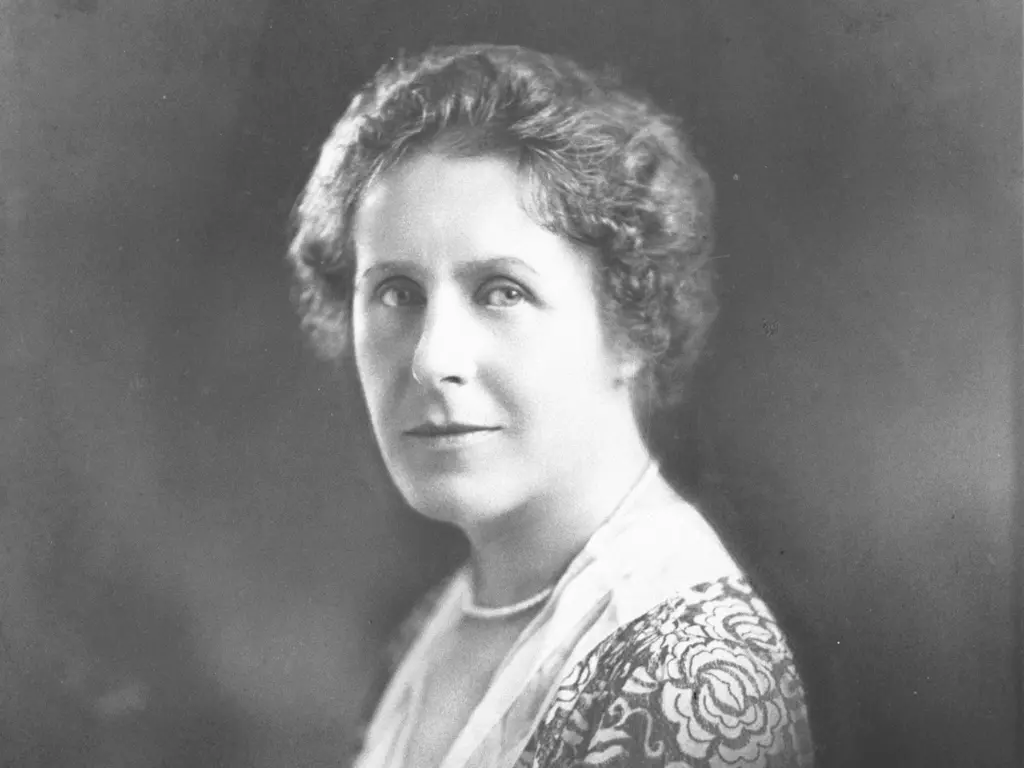
In April 1919, the first female Provincial Council members were elected. What makes these Provincial Council elections extra special is that women did not yet have the right to vote. They themselves were not allowed to vote, but could be elected.
In April 1919, the first female Provincial Council members were elected. What makes these Provincial Council elections extra special is that women did not yet have the right to vote. They themselves were not allowed to vote, but could be elected.
By 1919, people recognised the importance of women also taking seats in the Provincial Council and making themselves heard at the provincial level. Bertha Ledeboer, for instance, wrote in one of her articles on the elections for De Amsterdammer, on 12 April 1919, that women could make gains at the provincial level especially on education, care for the insane, tuberculosis control and on domestic issues such as drinking water supply, food supervision and electrification. In addition, women could then also vote on members of the Upper House.
First women in Provincial Council
Drenthe
Johanna Hindrika Bergmans-Beins
In 1919, Johanna Hindrika Bergmans-Beins (1879-1948) was the first woman for the Vrijzinnig Democratische Bond (VDB) to be elected to the Provincial States of Drenthe. She had a great fondness for Drenthe folklore and so she delivered her election speech in Drenthe. Bergmans-Beins retained her seat until 1923 and returned to politics in 1927. Besides her membership of the Provincial Council, she was socially active in many other areas. For instance, she was a member of the Guardianship Council, the Committee of Directors of the Provincial Museum in Assen, a chief board member of the Open Air Museum in Arnhem, a board member of the Mother and Child Association and served on a subcommittee on folklore of the Royal Academy of Sciences. However, Bergmans-Beins is best known as a writer. She published poems, stories and essays on old folk customs in Drenthe in numerous periodicals.
Friesland
Louisa Maria Besuijen-Lindeboom
Louisa Maria Besuijen-Lindeboom (1877-1967) was one of the first women in the Provincial States of Friesland (1919-1937,1937-1939) on behalf of the SDAP. Besuijen was also active in the Vereeniging voor Vrouwenkiesrecht. She was also elected municipal councillor in Leeuwarden in 1919. Issues she was concerned with: care for tuberculosis patients (Provincial Council) and pay for teachers/oppasters Fröbelschool (municipality).She was married to Karel Paulus Willem Besuijen. He was a member of the Provincial States of Friesland from 1918 to 1939 and the first SDAP deputy in Friesland.
Grietje Van Dijk
Grietje Van Dijk (1865-1955) was also elected to the Provincial States of Friesland in 1919. She is not mentioned in all election results, but the Leeuwarder Courant of 1 July 1919 discusses the provincial summer meeting, in which she and Besuijen participated. The Nieuwsblad van Friesland of 8 April 1919 also mentions Van Dijk.... Prior to her political career, she was a teacher. She was from Berlikum.
Anja van der Laan published an article in the Friesch Dagblad about the first female politicians in Friesland in which she also says that as a member of the States, Van Dijk advocated, among other things, increasing provincial subsidies for children's convalescent homes so that more children could be cared for there.
Groningen
Wabien Mansholt-Andreae
Former schoolteacher Wabien Mansholt-Andreae (1874-1966) became a member of the Provincial Assembly in Groningen on behalf of the SDAP in 1919. In 1905, she became secretary of the SDAP in Zuidhorn and the surrounding area. She was also active in the Bond voor Sociaaldemocratische Vrouwenclubs (BSDVC) and wrote numerous reflections in magazines such as De Proletarische Vrouw and De Socialistische Gids. Andreae remained a member of the States until 1927. Besides being a member of the States, she was also elected as a municipal councillor in Ulrum in 1919. In 1918, she was already on the electoral list for the SDAP for the Lower House elections.
The Socialistische Gids of September 1916 contains an essay by Andreae in which she contrasts social democrats and feminists/citizens in the suffrage struggle and explains that the SDAP must ensure that 'its struggle for Women's Suffrage does not [endanger] the General Male Suffrage'. The social democrats feared that universal women's suffrage could get in the way of universal men's suffrage.
Rose Vos
Her name does not appear in most election results, but Roosje Vos (1860-1932) was also among the first women in the Provincial Council. From 1919 to 1927, she was a Member of States in Groningen on behalf of the communist SDP. She was initially active with the SDAP, where she advocated women's suffrage and the eight-hour day at the 1901 party congress. From the SDAP, she switched to the SDP. In 1918, she was also on the electoral list on behalf of the SDP for the Lower House.
Limburg
Marie Geys-Rappange
Marie Geys-Rappange (1892-1982) was elected as a Member of States in Limburg on behalf of the SDAP in 1919. Geys-Rappange was actually the first elected woman in the Netherlands, as Limburg was the first province to hold elections. Many different newspapers that wrote something about her at the time made it clear that she was a working-class woman; her husband was a miner. Geys-Rappange was also elected municipal councillor in Heerlen in 1919. At the provincial level, she tabled an amendment against dismissing female civil servants when they married. This amendment was not adopted. It was not until 1956 that the ban on employment of married female civil servants was abolished. Member of Parliament Corrie Tendeloo played an important role in this. Geys-Rappange also fought for a provincial subsidy to establish and maintain the Nederlandsch instituut voor volksvoeding.
North Holland
Anna Aukes-Timmers
Anna Aukes-Timmers (1862-1935) was elected a member of the States on behalf of the VDB. She was a board member of the Nederlandsche Bond voor Vrouwenkiesrecht. She founded a branch of this in Alkmaar in 1907 and in Bergen in 1916. According to an article in De Amsterdammer, she was 'the type of the amiable, practical Dutch housewife'. In the Provincial Council, she spoke out against child allowance. She thought people should work for their money and not just get it. She saw more merit in paying for women's family work. Aukes was the first woman to speak in the North Holland States. So the reading room, where members went for a cigar or cigarette, emptied to hear the first woman's word in the States.
A.C. van den Bergh
On behalf of the VDB, A.C. van den Bergh was also elected to the States in 1919. Prior to her political career, she was a teacher in Groningen and headmaster of the HBS in Amsterdam. She was also one of the first board members of the Amsterdam branch of the Nederlandsche Bond voor Vrouwenkiesrecht. Education remained an important issue for her even outside schools. For instance, she served on the Amsterdam and provincial exam committees and was a chief board member of the Association of Teachers of Secondary Education. She also collaborated on the exhibition De Vrouw 1813-1913 as a member of the Committee for Secondary Education. In an interview published in The Telegraph, she talks about how she is as interested in popular development as she is in feminism. She also tells how she was the first woman on several committees and had to deal with several men who were against female participation:
'Thus, when I was moved from Groningen to Amsterdam, I became a member of the committee for principal act examinations. Although the chairman, an anti-revolutionary, was very much against it on principle. He later said, "I would never invite a woman again, if I wasn't forced to". But he was very satisfied with the work, done by me!'
Marie Boissevain-Pijnappel
Despite being elected to the States in 1919 on behalf of the Economischen Bond, Marie Boissevain-Pijnappel (1870-1950) was not herself a member of the union. The press praised Boissevain-Pijnappel for her choice not to commit herself to a party and thus not to a party programme. On the eve of the Provincial Council elections, she spoke out about women in provincial politics:
"Mrs Boissevain-Pijnappel, discussing the role of women in governing bodies, pointed out that they actually have a double function to fulfil in these bodies, as they also have to sit there as representatives of their gender, although they should guard against one-sidedness in this respect."
She turned down candidacy for the Lower House and the municipal council at the time, 'because she did not wish to take so much time away from her large family'.
Lucie van Kuijkhof-Koedijk
Lucie van Kuijkhof-Koedijk (1863-1930) was elected a member of the States in 1919 on behalf of the SDAP. She was one of the founders of the BSDVC and was also on its main board. She was also a member of the Poor's Council and the School Committee in Amsterdam. Within the Provincial Assembly, Kuijkhof was appointed committee member of Bestuur der Provinciale Ziekenhuizen.
Esselina Hendrika Caderius van Veen
Esselina Hendrika Caderius van Veen was elected a member of the Provincial Council on behalf of the SDAP in 1919 at the age of 32, but had previously headed the local branch in Zandvoort. She was also secretary of the BSDVC. In 1918, she was also eligible for the Lower House on behalf of the SDAP. She was a member of the States only briefly; in 1920 she was already succeeded and her seat went to a man.
Overijssel
Gaatske Adriana Leendertz-Ladenius
In 1919, Gaatske Adriana Leendertz-Ladenius (1883-1953) was elected the first female member of the provincial council of Overijssel on behalf of the SDAP. She was an ardent supporter of suffrage for all women and opposed 'ladies' suffrage'. In the same year, she was also elected municipal councillor in Almelo. A year earlier, she had stood for the SDAP on the electoral list for the Lower House elections. She remained, with an interruption due to the German occupation, a member of the States until 1950. As a member of parliament, she devoted herself mainly to public health, social welfare and popular development. In her first speech, Ladenius asked the provincial executive to investigate the methods of nursing the sick in general and tuberculosis sufferers in particular.
Utrecht
Hendrika Bakhuis-Wolters
Hendrika Bakhuis-Wolters (1876-1958) became the first woman in the Provincial States of Utrecht in 1919. On behalf of the SDAP, she remained a member of the States until 1928. Bakhuis was re-elected in 1923 and 1927 and succeeded in 1929 by Ms Wolthers-Arnoldi (SDAP). She additionally served on the Main Board of the BSDVC. One of the issues Bakhuis-Wolters was actively involved in in the States was tuberculosis control. For instance, she pushed for the construction of a sanatorium and allowances for local associations for control. In 1919 year Bakhuis-Wolters was also elected councillor in the Zeist municipal council. The locals were still somewhat uncomfortable after the arrival of the new politician; popularly, Bakhuis was jokingly called 'Bak home roots'.
Zeeland
Dien Duiker-Blekkink
Dien Duiker-Blekkink was the first female Provincial Council member of Zeeland, on behalf of the SDAP. In the same year, she was also elected councillor in Terneuzen, but had to resign both positions in 1920. Her husband had moved to Nijmegen, which meant she was no longer legally resident in Terneuzen, a prerequisite for her position as councillor and member of the Provincial Council. Het Volk speculated that her husband's resignation, forcing him to move, was due to opponents of the Social Democrats, in order to get rid of Duiker. They called it "bread robbing as Socialists fight". These speculations were voiced in 1919, during the run-up to the municipal elections. By 1920, on the contrary, there were suggestions that Mr Duiker moved to Nijmegen to annoy his wife, and there is no further mention of his resignation or political opponents anywhere.
South Holland
Suze Groeneweg
As the first woman in the Lower House, Suze Groeneweg (1875-1940) is the best-known woman on this list. What is less well known, however, is that she was also a member of the Provincial Council of South Holland from 1919 to 1937, where she dealt with issues that were close to her heart, as well as more general topics such as infrastructure and water tariffs.
Anna Albarda-Brals
Anna Albarda-Brals (1874-1929) was elected on behalf of the SDAP in 1919. She served on the Main Board of the BSDVC together with Bakhuis-Wolters. Albarda was an artist; images made by her for the SDAP and BSDVC can be found in the IISH archives. Brals was list leader for the SDAP in South Holland during the 1919 elections. In the Provincial Council, she argued for more subsidies for child health, among other things. Her husband was Willem Albarda. He succeeded Troelstra as leader of the SDAP in 1925. He was also Alderman of Education in The Hague. Together, they fought for the principles of Social Democracy.
16 women in the Provincial States in 1919
Sixteen women were finally elected in the 1919 Provincial Council elections, under passive women's suffrage.* Only Gelderland and North Brabant had to do without any female Statesmen in 1919. Of the elected women, 75% were from the social democratic corner, with one SDP and 11 SDAP. In one of her articles for De Amsterdammer, Bertha Ledeboer therefore criticised the concentration of women from one specific political corner. Drenthe was the only province without a female member of parliament on behalf of the SDAP. In several election results, Ms De Vries-Bruins is listed as an elected member of the States of Groningen. She turned out not to be elected after all. However, she was installed as a member of the States later that year, in July 1919.
* Most assume 15, but the biographies that can be found about Roosje Vos state that she was also elected a member of the States in 1919. This has also been found in one newspaper article.