Willemijn van der Goot (2 May 1897 - 16 January 1989) was the first female PhD economist. In 1935, she co-founded the International Archive for the Women's Movement (IAV), now Atria. She initiated From mother to daughter, a standard work on the history of the women's movement and the position of women in the Netherlands from 1798 to 1968. Posthumus-van der Goot remained involved in the women's movements throughout her life.
Willemijn van der Goot (2 May 1897 - 16 January 1989) was the first female PhD economist. In 1935, she co-founded the International Archive for the Women's Movement (IAV), now Atria. She initiated From mother to daughter, a standard work on the history of the women's movement and the position of women in the Netherlands from 1798 to 1968. Posthumus-van der Goot remained involved in the women's movements throughout her life.
Van der Goot studied economics, a then-new study at the Nederlandsche Handels-Hoogeschool in Rotterdam. She graduated on 26 March 1926. On 11 December 1930, she became the first female economist to receive her doctorate with the thesis The Spending of Income: The cost-of-living index. She focused on the consumer in her thesis, making visible the share of women in the economy. An important tool she used were statistics.
Feminism
In the 1930s, Willemijn Posthumus-van der Goot became involved in the women's movements. Because of the crisis, political parties wanted to impose restrictions on married working women to work. Out of indignation at this, she took part in the 1934 study conference of the Vereeniging voor Vrouwenbelangen en Equal Staatsburgerschap (VVGS). There, it was decided to organise a youth meeting to bridge the gap between the old and the new feminist generation. This Youth Work Conference took place in 1935 and led to the formation of the Youth Work Committee. Posthumus-van der Goot became chairman of this committee the first year after its foundation.
Posthumus-van der Goot also conducted economic research that disproved the view that married working women's contribution to family income would be small.
1935: International Archive for the Women's Movement
In 1935, Posthumus-van der Goot, together with Johanna Naber and Rosa Manus, founded the International Archive for the Women's Movement (IAV). The 'first feminist wave' was over, and many women who had been active in the women's movements around 1900 were already old or deceased. The three founders of the IAV felt that the heritage of women and the history of the women's movement should be preserved. The International Institute of Social History (IISH), also founded in 1935, provided two rooms as accommodation.
"They started the work, we will continue it, others will take over."
Historical importance
Posthumus-van der Goot was aware of the historical importance: "It is as if all these women, who often didn't know each other, sometimes fought each other, all reached out to each other, historically speaking. In fact, it's as if they also reached out to us, if we would just look back. We don't have to do the things we are trying to achieve in our time alone. They started the work, we will continue it, others will take over."
In addition, young feminists in the 1930s needed well-documented knowledge of the past. For example, to be able to defend themselves against the government, which since the 1920s had regularly tried to ban women from gainful employment. The beginning of the IAV collection was formed by three hundred books by Rosa Manus. A year later, the archive of Aletta Jacobs (1854-1929) was added.
Female voice
In 1935, Posthumus-van der Goot became editor of the women's page in De Groene Amsterdammer. She also used that position to give voice to the women's movements. In 1936, Posthumus-van der Goot swapped the magazine for AVRO radio, where she was put in charge of broadcasts for women. According to her, radio was well suited to propagating the 'female point of view'. Radio allowed women across all the dividing lines of compartmentalisation to reach out to each other. She became known for her programme Short conversations from woman to woman. Anonymous women spoke in five minutes about an important event in their lives, where originality and depth counted as criteria.
Publications
As her work for radio declined, Willemijn Posthumus-van der Goot began to write more. In 1946, she published the theoretical treatise Statistics and reality. In it, she discusses the subjective and manipulative nature of statistics, which can nevertheless closely approximate actual reality.
In conjunction with her efforts to re-establish and rebuild the IAV, which had been looted during the occupation in World War II, the feminist historical review she initiated and co-edited with Anna de Waal was published in 1948, From Mother to Daughter: Women's Part in a Changing World. The book was published as part of the exhibition The Dutch Woman, 1898-1948. An Exhibition to mark Queen Wilhelmina's fiftieth anniversary of her reign and Juliana taking office as the new queen.
In 1961, Posthumus-van der Goot published a historical overview of the women's peace movement under the title Women fought for peace. She wrote more publications on the subject, stressing the ability of women as mothers to create and preserve peace. She was also active in several organisations in the field of peace and international cooperation.
Personality
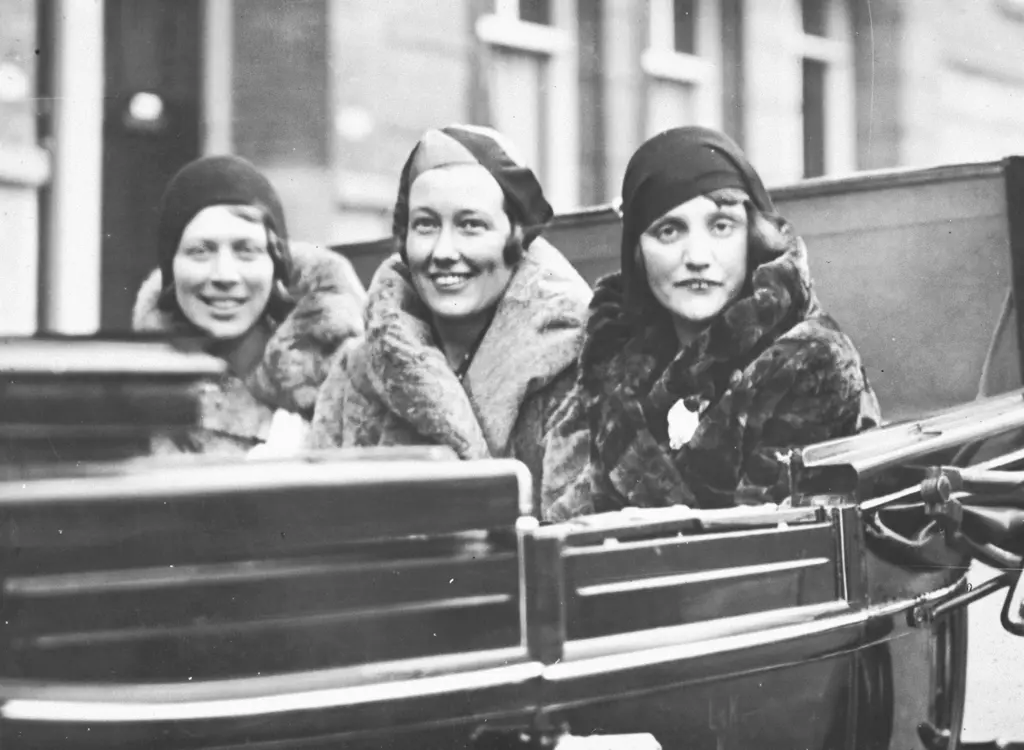
Willemijn Posthumus-van der Goot was an imposing presence, who no doubt drew assurance from the connections she had through her family and her marriage to the successful Professor Posthumus. In interviews, she emerges as a lively and humorous storyteller. In a photograph taken on the occasion of her promotion, she truly poses like a movie star, with fox around her neck. She belongs to the first generation of socially active women, with contemporaries like Johanna Westerdijk, Marie Anne Tellegen, Jane de Iongh, Corrie Tendeloo and Marga Klompé, who not only built careers but also tried to change the lives of women in general.
"As long as the Dolle Mina's remain witty and do not let the man-Mina's with political aspirations keep them from their goal, it is a very uplifting movement."
Women's movements
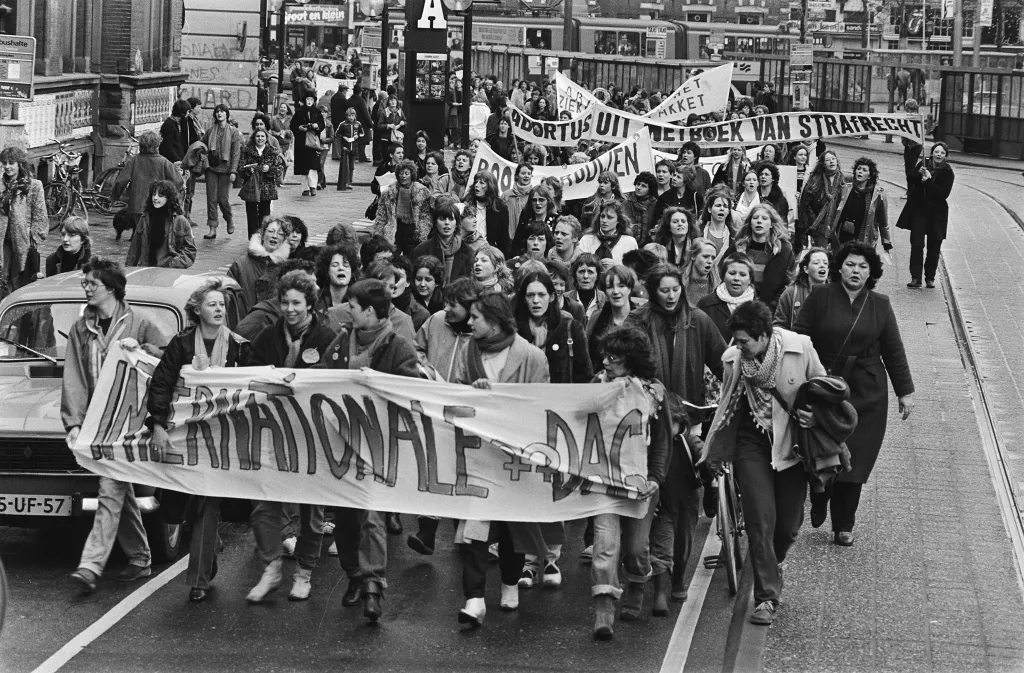
Posthumus-van der Goot remained involved in the women's movements throughout her life. In an interview in De Tijd on 24 January 1972, she replied to the question "How do you feel about the latest gender equality movements":
"(...) Dolle Mina is a sparkling breath of fresh air compared to the fierce feminist organisations in America and France. There, for example, you have Women's Lib and the Torchon qui brule, both 100 per cent anti-male and anti-motherhood. These are incredibly bitter women. The female interpretation of things does not come into play with them. As long as the Dolle Mina's remain witty and don't let the man-Mina's with political aspirations keep them from their goal, it is a very uplifting movement."
Claire Posthumus
From her marriage to Nicolaas Posthumus (26 February 1880 - 18 April 1960), daughter Claire was born in 1938. Claire Posthumus was librarian at the IIAV (the predecessor of Atria) from 1974 to 1998; for her efforts she received the Harriet Freezerring in 1991.
Death
Willemijn Posthumus-van der Goot died on 16 January 1989. Her cremation on 20 January 1989 was attended by dozens of representatives of the women's movements from the 1930s onwards.
Willemijn Posthumus-van der Goot archive
If you want to know more about Willemijn Posthumus-van der Goot or do research on her, you can view the contents of her archive here. The archive can - after permission - be viewed digitally in the study room at Atria.