In the series Archives of resistance, we dive into the often invisible but important realm of everyday health activism. In this article, Atria takes a closer look at everyday health activism, why it is important to highlight this form of activism, what role the archive plays in this, and we share examples of people who made a difference - often unnoticed.
In the series Archives of resistance, we dive into the often invisible but important realm of everyday health activism. In this article, Atria takes a closer look at everyday health activism, why it is important to highlight this form of activism, what role the archive plays in this, and we share examples of people who made a difference - often unnoticed.
"Freedom is a constant struggle."
With these words, activist Angela Davis underlines that freedom cannot be taken for granted, but must be fought for every day. Contrary to popular belief, this does not only happen on the barricades or during big demonstrations, such as protests against the genocide in Gaza or the Feminist March. Activism also takes place on a much smaller scale. In everyday life and outside the big media, because some people do not have the space or means to make their voices heard through the usual channels. Social and political change also, or especially, begins in everyday life and in small acts. We call this everyday activism.
Everyday health activism, which deals with issues such as access to contraception, abortion rights, menopause or trans care, is a specific form of it. We can also call this everyday health activism. Think, for instance, of informal discussion groups where trans people share their experiences, or spreading knowledge about menopause through social media. These are the small acts - within informal networks, in personal circles or through local initiatives - through which people resist systematic oppression and try to improve their own well-being or that of others.
Iconic and everyday activism
Although iconic activism - the often large-scale and visible demonstrations - and everyday activism may at first sight appear to be different forms of resistance, they share the same goal. Both forms of activism seek to bring about social and political change. They also complement each other in the fight against inequality and oppression. To better understand the concept of everyday activism, here we highlight both this form and iconic activism.
Iconic activism: open opposition to institutions
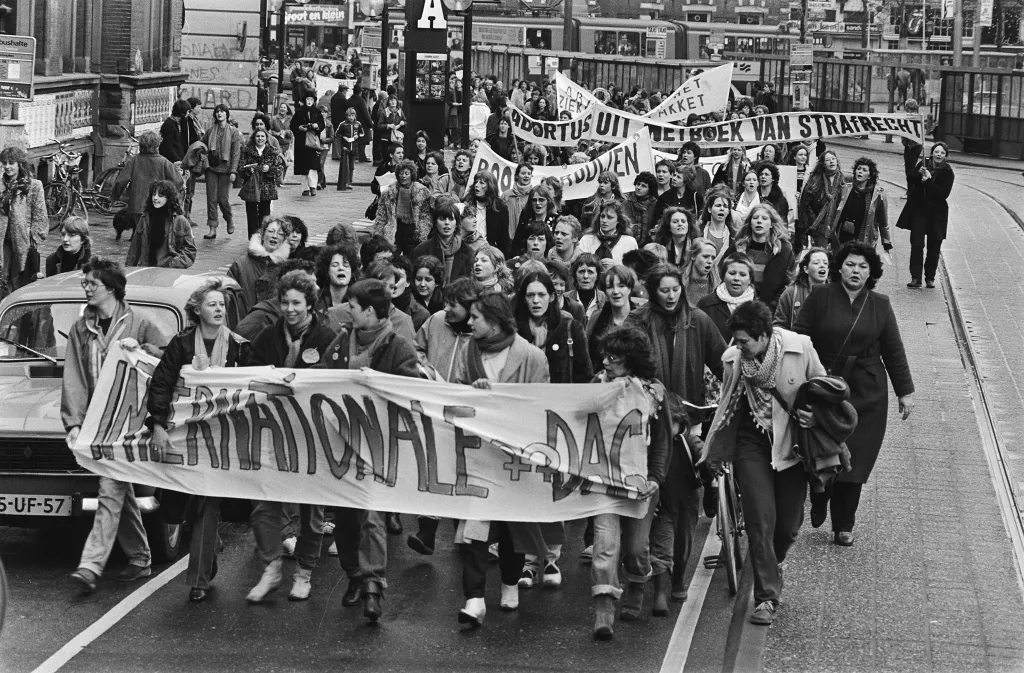
Iconic activism focuses on openly opposing influential institutions that set society's norms, laws and rules, such as the government, corporations and media (Fish et al., 2018). This type of activism is often recognisably provocative and receives a lot of attention in the media and public discourse. Iconic activism is also often visible and large-scale - think protests, demonstrations or strikes - but not necessarily so. An example of iconic activism is the very public fight for women's suffrage, as waged by Aletta Jacobs and the Vereeniging voor Vrouwenkiesrecht in the Netherlands around 1900, among others. The women's suffrage movement organised large-scale, public actions, petitions and demonstrations to change political and social structures and give women the right to vote. A recent example is the Feminist March in Amsterdam, where more than 20,000 people took to the streets on 8 March 2025 to demonstrate for women's rights, gender equality and social justice.
"Where iconic activism is the dynamite that rocks existing structures, everyday activism is the patient hacking at the foundations of inequality."
Everyday activism: social change in the immediate environment
Whereas iconic activism focuses only on actions symbolic of a broader movement or changes in institutions, everyday activism is also about embodying the desired social change in one's own life or immediate environment (Fish et al., 2018). Rather than just advocating for change at a formal and structural level, everyday activists may find that they actually carry the social change they want to see into their own lives. They 'live' these desired changes through small actions. We call this prefigurative activism, and it is often part of everyday activism. This activism therefore often takes place in the private sphere, in informal networks and in people's immediate environment. It arises out of the need to address and navigate inequality, exclusion or injustice. Individuals - or small groups of people - do this by, for example, sharing experiences and knowledge, or forming support and discussion groups.
Why choose everyday activism?
People often choose everyday activism because they do not have the space or resources to make their voices heard through the usual channels. This is due, for example, to security concerns, caring responsibilities or limited mobility and health issues. The topic may also be too sensitive, lack the right words to interpret and communicate social experiences(hermeneutic injustice), or there is not yet an organisation dedicated to the marginalised group. People may also choose this form of activism because it better suits the goal they want to achieve, such as strengthening social bonds or making their reality more liveable. Moreover, this form of activism does not require you to be affiliated with an organisation or participate in a mass movement to make a difference.
From everyday to iconic
As indicated earlier, iconic and everyday activism both aim to limit the dominant norms and claims of privileged groups (Scott, 1985). Whereas iconic activism is the dynamite that challenges existing structures, everyday activism is the patient hacking at the foundations of inequality. Everyday activism is thus a silent but at the same time essential driver of social change.
From performing abortions yourself to the Boss in your own Belly movement
Everyday activism can - but does not always have to - also grow into iconic activism. Small, personal initiatives then grow into a broad social movement. Abortion activism in the Netherlands, for example, initially started with women and a few concerned doctors who performed abortions themselves. They also helped women find safe options, as official help was lacking and abortion was forbidden. GPs then set up the first abortion clinics together with activists, such as the Mildredhuis in Arnhem in 1971. In doing so, they went directly against the existing system and legal restrictions.
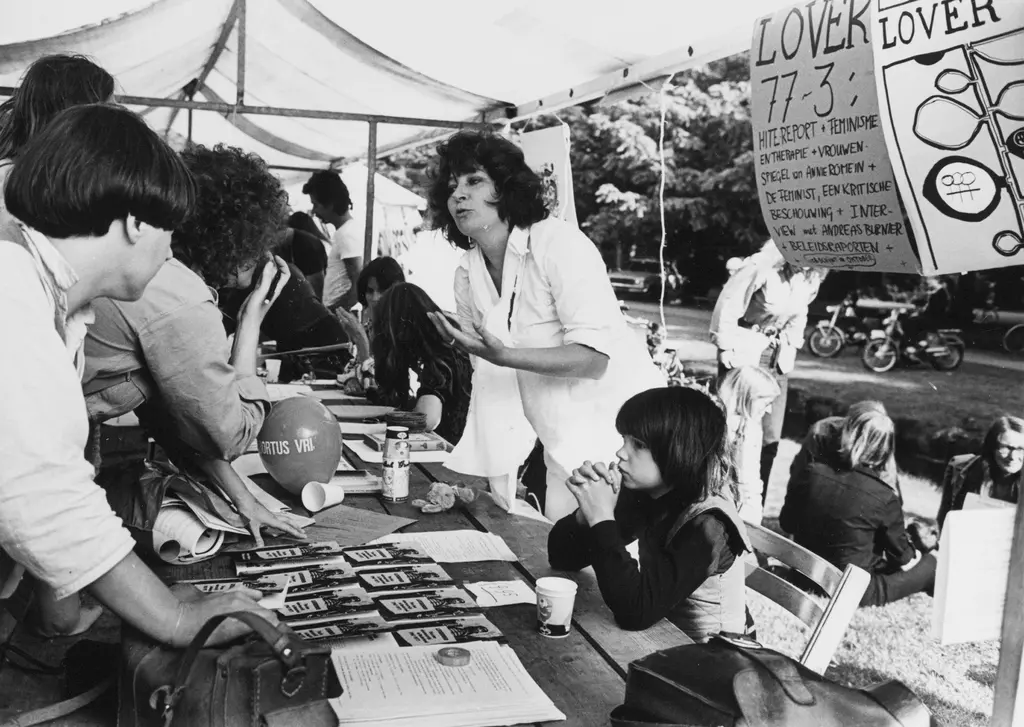
By sharing experiences, supporting each other and seeking practical solutions, activists offered small-scale resistance to the systematic exclusion of women in decisions about their own bodies. These daily forms of resistance grew into the broad Baas in eigen buik movement of the action group Dolle Mina, which put the right to self-determination at the centre. Through demonstrations, public campaigns and making personal stories visible, abortion became a topic of social debate and political struggle. What began as everyday activism eventually led to fundamental changes in legislation and care. Self-determination over one's own body became a widely accepted right.
Everyday health activism
Everyday health activism is a specific form of everyday activism. It focuses on pursuing social change around health and physical and/or mental well-being, and resisting systematic oppression within these domains. This form of activism is important because it responds to the needs of people who often do not feel seen or heard within the mainstream healthcare system or public discourse. Especially for groups facing stigma, exclusion or lack of appropriate care, everyday health activism offers a way to influence their own well-being and that of others.
According to Zoller (2005), researcher of activism related to health problems, health activism is an attempt to give individuals more control over the decisions and actions that affect their health. Brown et al (2004) add that health activism also focuses on improving medical treatments and the quality of healthcare.
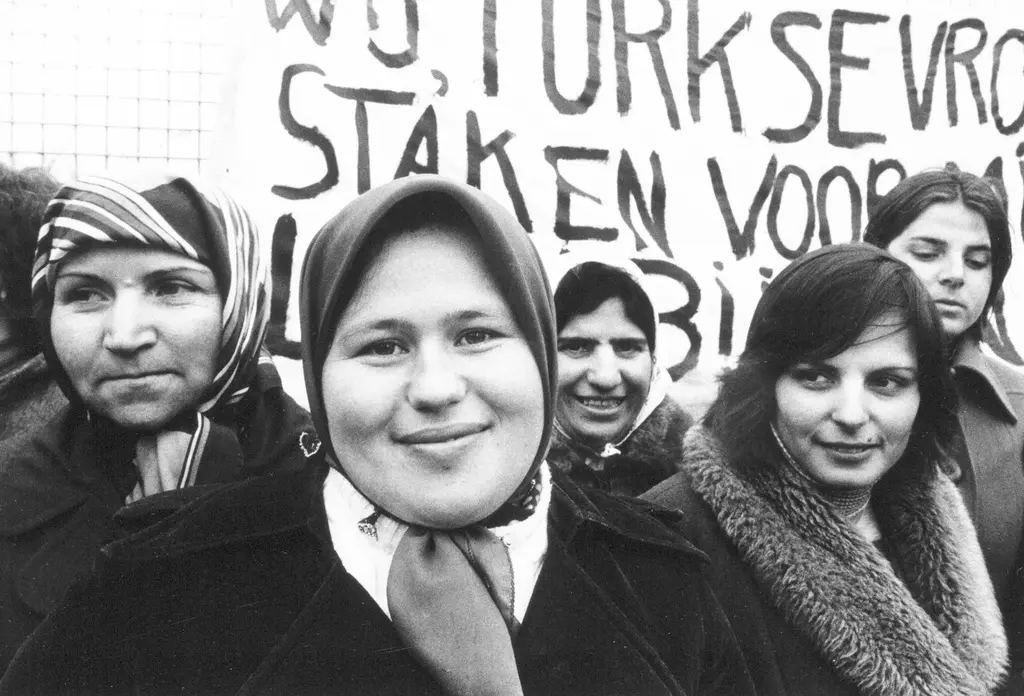
Sharing knowledge, supporting each other and standing up together for better care through everyday health activism creates a network of solidarity that is not visible on a large scale, but is of great significance to those involved. Consider, for example, people disseminating information within their communities about access to contraception and abortion rights, or informal discussion groups where trans people's experiences are shared and support is offered.
A safe place for trans people and gender-affirming surgeries
A striking example of everyday health activism, described by historian Alex Bakker in his book Transgender in the Netherlands (2018), is Hotel Hegra in Amsterdam. In the 1960s, this hotel offered American trans women a safe place during their stay in the Netherlands for gender-affirming surgeries. An informal network emerged here where trans women met, shared experiences and found support - something that was lacking elsewhere at the time.
According to Bakker, surgeon H.G. Koch also contributed to social change by performing gender-affirming surgeries, often outside the official circuit, in the 1950s. When hospitals refused this care, he even operated in his own home practice. Both initiatives not only created space for mutual support, but also broke through the isolation of trans people and paved the way for greater visibility, acceptance and better trans care.
Everyday health activism on social media: take the floor yourself
Today, we are also seeing forms of everyday health activism, partly on social media. For instance, through platforms like Instagram, TikTok and YouTube, people with endometriosis share their personal stories and practical tips. By speaking candidly about their symptoms, the often difficult road to a diagnosis and the impact of endometriosis on their daily lives, they break persistent taboos. They also increase understanding of this invisible condition. This is all the more important in a world where scientific research on endometriosis has long paid little attention to patients' real-life experiences. Research has previously focused, for example, on the perceived attractiveness of women with endometriosis. Thanks to online communities, people with endometriosis are now getting the word out themselves, more public attention is being paid to the disease, and fellow sufferers feel less alone.
Everyday health activism in the archive
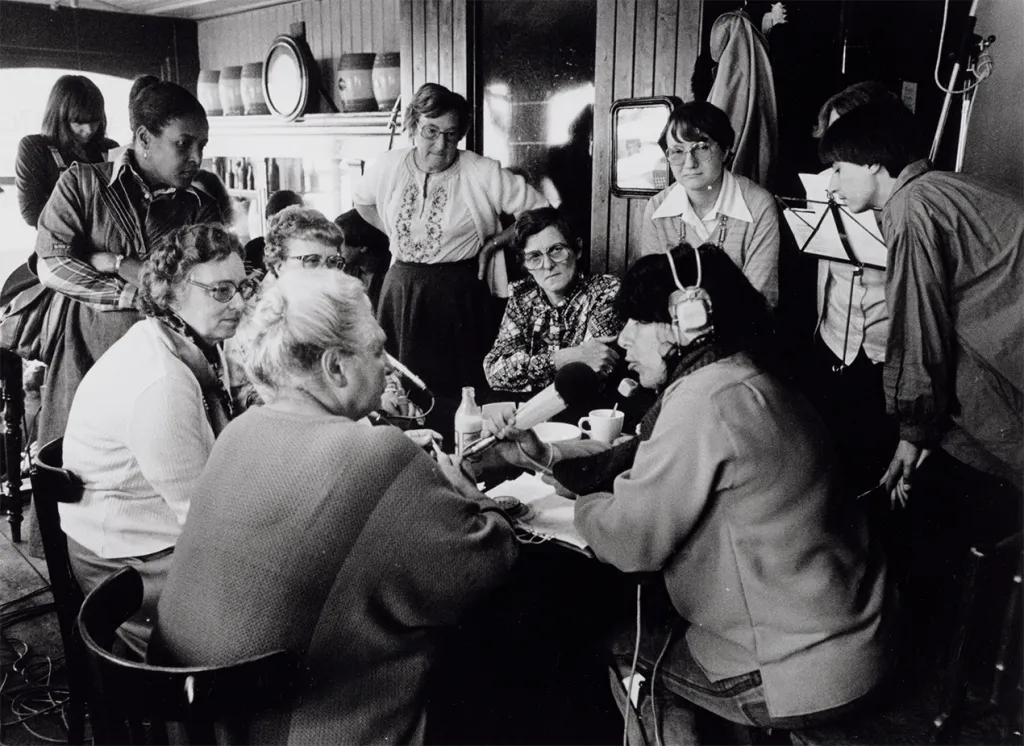
Besides the more visible examples in society, the archive also plays an important role in recognising and acknowledging everyday health activism. Atria's archive is ideally suited to look for these forms of activism because Atria, with its unique collection, focuses, among other things, on making visible the history of groups that are outside the mainstream, and therefore also not highlighted in the major media.
Who is heard and who is not?
Our researchers also delve into the archives in search of traces of everyday health activism. Because it is precisely the stories of marginalised groups that are often not recorded in official documents or major media outlets. This phenomenon is known as 'symbolic annihilation': the structural absence of certain groups or experiences in media or public representations, leaving their contribution to social change invisible (Brown, 2020). This is partly due to the fact that recorded history in media - but often also in archives - always reflects what was considered important at a particular time and context. Media and archives reflect existing power relations and thus show who does, and especially who does not, get a place in historiography. It thus requires a critical eye: who is being heard and recorded, and whose stories are left out of the picture?
Double layer of exclusion
With health activism, there is a double layer of exclusion at play. First, experiences around health and care are often seen as part of the private sphere - a domain that was historically considered 'feminine'. Things like housework, family care and health were long the responsibility of women and belonged behind the front door. In contrast, the public sphere, where issues such as economics and politics were discussed and recorded, was traditionally the domain of men (Fraser, 1990).
Second, women and other marginalised groups were also often disadvantaged within health care. Women's bodies are less examined than men's bodies, and women's complaints are regularly taken less seriously. This is especially true for women of colour, who face racial prejudice and additional forms of invisibility and unequal treatment in addition to gender. For example, research by Hoffman et al (2016) shows that complaints from black patients are more often trivialised, leaving these perspectives structurally underexposed not only in everyday life or the public sphere, but also within medical institutions and historiography.
The silent engine
Everyday activism, alongside iconic activism, plays an indispensable role in the pursuit of social change. By focusing mainly on big, high-profile moments, such as mass protests, we risk overlooking the importance of the everyday actions of individuals and small groups. Discrimination and exclusion are often so normalised or subtly present that they are not always noticeable and difficult to combat directly (Fabian & Nielsen, 2020). This is precisely where everyday activism is quietly heroic. Marginalised groups that often lack access to mainstream debate strike a chord in this domain. By bringing about social change on a small scale, structures and norms in society are slowly but surely changed. Everyday activism is thus a silent but at the same time essential driver of social change precisely because it arises where the big, mainstream systems fail.