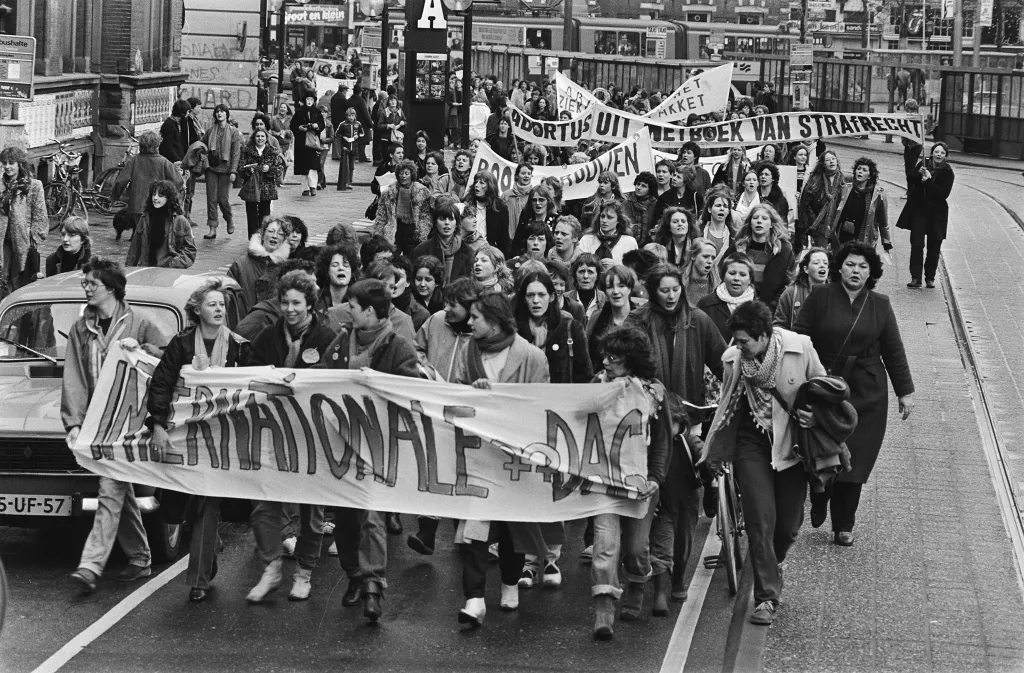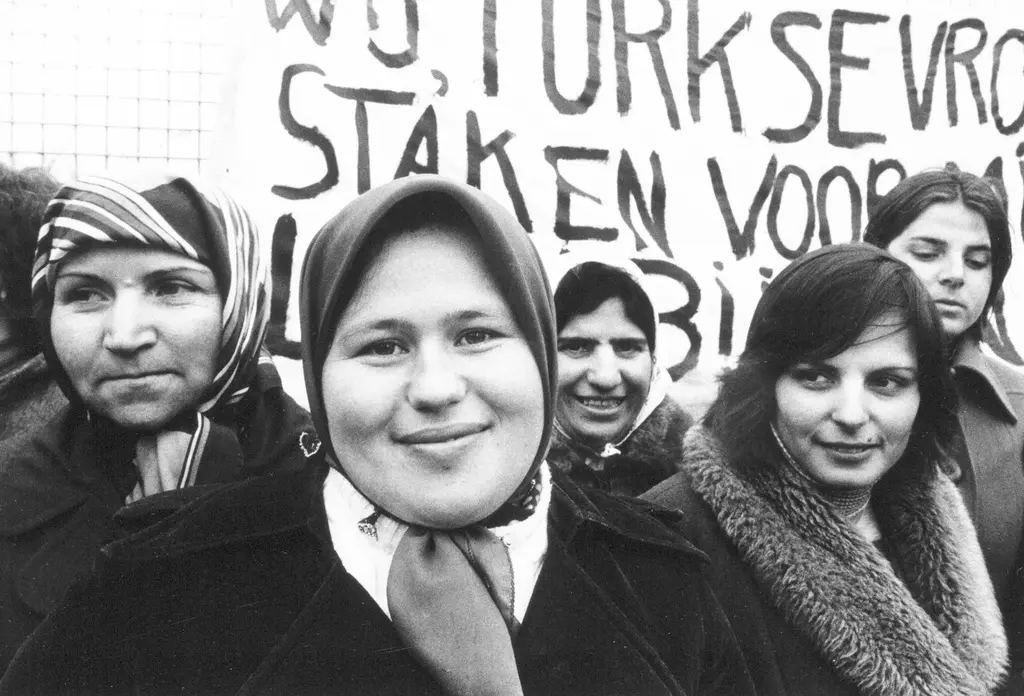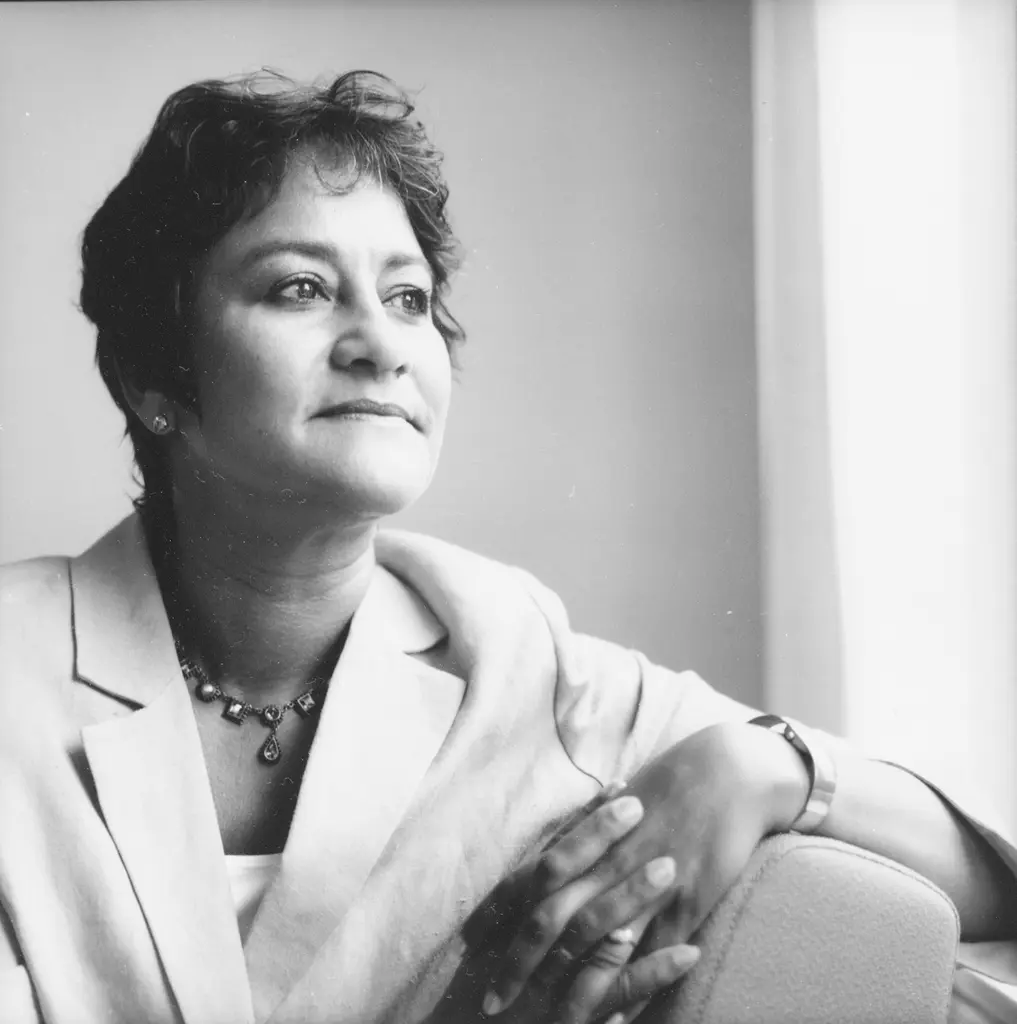
As director of E-Quality (1998-2012), Joan Ferrier fought for equal opportunities and rights of black, migrant and refugee women and men. Atria holds E-Quality's archive, Ferriers persoonlijk archief and many photos of its empowerment activities.
As director of E-Quality (1998-2012), Joan Ferrier fought for equal opportunities and rights of black, migrant and refugee women and men. Atria holds E-Quality's archive, Ferriers persoonlijk archief and many photos of its empowerment activities.
All these sources provide an inspiring picture of her and how she stood up for intersectional gender equality policies. During her internship at Atria, Tamara Hartman unlocked Joan Ferrier's personal archive and described Ferrier's life and work as part of it.
Biography Joan Mary Ferrier
Joan Ferrier was born on 14 December 1953 in Paramaribo, Suriname, the daughter of Johan Ferrier and Edmé Vas. She is an older sister of Kathleen Ferrier, and is a younger half-sister of authors Cynthia McLeod and Leo Ferrier. Both her parents had backgrounds in education, so she was tried to think along with big issues - however mature - during her upbringing. Equality was also paramount. Thus, her parents strove for education throughout Suriname, including the provincials. From an early age, this inspired her, shaped her, and she knew for sure: later she wanted to go into education.
Institutional racism
Joan Ferrier spent her childhood alternately in Suriname and the Netherlands, and partly because of this she came into contact with institutional racism in the Netherlands. Whereas in Suriname everyone was black, in the Netherlands black was subordinate to white, she saw. She went to Comenius College in Hilversum, as the only non-white student. When she started studying Orthopedagogy at Utrecht University, she specialised in topics such as diversity, ethnic minorities in the Netherlands and children from economically emerging countries. In her student days, she was a member of Student Association Veritas, where she also met her eventual husband Jan Timmermans.
One tree, so many leaves
Connecting is something that has characterised her all her life. One of her slogans was:
"Wan bon, someni wiwiri" [one tree, so many leaves]
A saying by the Surinamese poet Dobru, which stands for unity in diversity. Ferrier felt connected to her different roots, which were scattered all over the world. This also seeped into her work in intercultural youth care, among others. Among other things, she worked at the Social Agogic Centre of the Civil Orphanage where she finally became manager of the categorical shelter for Moroccan boys, called Darna, and that for Moroccan girls, called Darha. She was also a lecturer in Transcultural Pedagogy at the Hogeschool van Amsterdam and an academic staff member at the University of Amsterdam. She co-founded the Institute for Transcultural Pedagogy (ITP) in Amsterdam.
E-Quality
Many people will know her as director of E-Quality: the national knowledge centre for gender and ethnicity, focusing on women's gender equality in the multicultural society. She was this from 1998 to 2012, until E-Quality merged into what is now Atria. After this, she remained very active socially. From May 2012, she was director of her own consultancy firm. Among other things, she also chaired the Foundation for the Remembrance of the Slavery Past for the year 2013. Joan Ferrier was unprecedentedly positive, enthusiastic and always striving for justice. She made an indispensable contribution to the black, migrant and refugee women's movement of the 1970s and 1980s, and her inventory therefore contributes to the still underexposed documentation of this women's movement. Thus, Joan was exceptional in her postcolonial and intersectional thinking. Within E-Quality, institute for gender and ethnicity, she was one of the first to institutionalise this intersectional thinking in Dutch policy.
Achievements
In 2008, she received the award for Black female manager of the year. In 2011, she was appointed Knight of the Order of Orange-Nassau for her efforts in the field of gender equality, family and diversity, and in 2013 she received the Frans Banninck Cocq Penning. She also initiated and managed the Johan Ferrier Fund, in honour of her father, the last governor and first president of the Republic of Suriname. A named fund was established in her name with the Oranje Fund. The Joan Ferrier Medal is awarded periodically to people who realise one of her ideals. Joan passed away on 8 March 2014, on International Women's Day. To this day, her work is of unprecedented value and a source of inspiration for today's anti-racist women's movement.
Also watch the video recording of the programme The unbreakable power of women: the legacy of Joan Ferrier, a collaboration of Atria with Tamara Hartman (who initiated this as Humanity in Action Fellow), Gloria Wekker and Kathleen Ferrier.