What role did women's movements play in putting issues on the agenda? And how did they mediate the conversations around addressing violence against women? Find out more about this fight against violence and its feminist history in this article.
What role did women's movements play in putting issues on the agenda? And how did they mediate the conversations around addressing violence against women? Find out more about this fight against violence and its feminist history in this article.
It would take until the 1980s before the Dutch government actively tackled violence against women*. This was preceded by social pressure. In the 1970s, more and more people began to speak out against violence against women. Inspired by foreign feminist movements, Dutch feminists tried to pull the subject out of the closed private sphere and make it a public issue. This collective pressure led to several international treaties, policies and conferences. In the 21st century, international feminist movements, such as #MeToo, are once again creating a lively social and political debate. This time on various forms of violence against women.
Violence against women and Blijf van mijn lijf
In the 1970s, domestic violence in the Netherlands was politicised under the term "women's abuse". Victims of violence could go to a shelter in Amsterdam for the first time in 1974. Soon an extensive national network of women's shelters was built up against this violence, called Blijf van mijn lijf. The organisation saw women's abuse as a structural social problem, not a problem of the individual. These houses concluded that violence against women was a result of unequal power relations between men and women.
Thanks to the houses, the perpetrators also became more visible. The perpetrator of violence was no longer the unknown man in the bush: the (intimate) partner became the biggest threat to women. Whereas the houses initially ran on donations and volunteers, from 1976 onwards Blijf van mijn lijf received subsidies from the government. But this government intervention was seen as problematic, as the independent position of the institution was compromised.
Sexual violence and rape
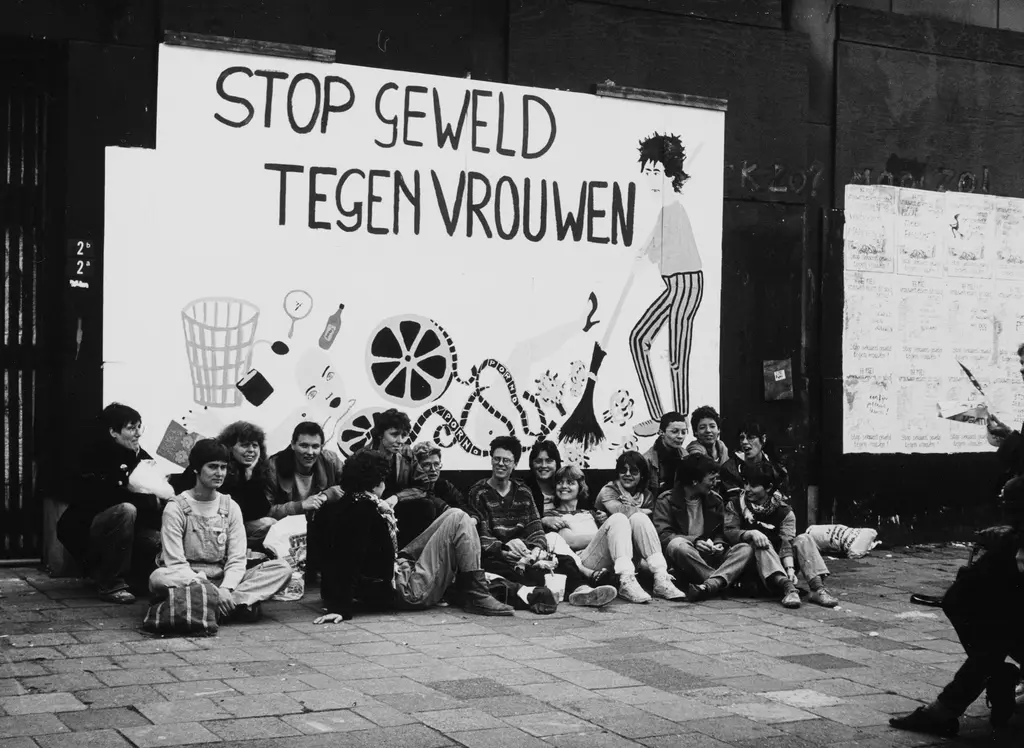
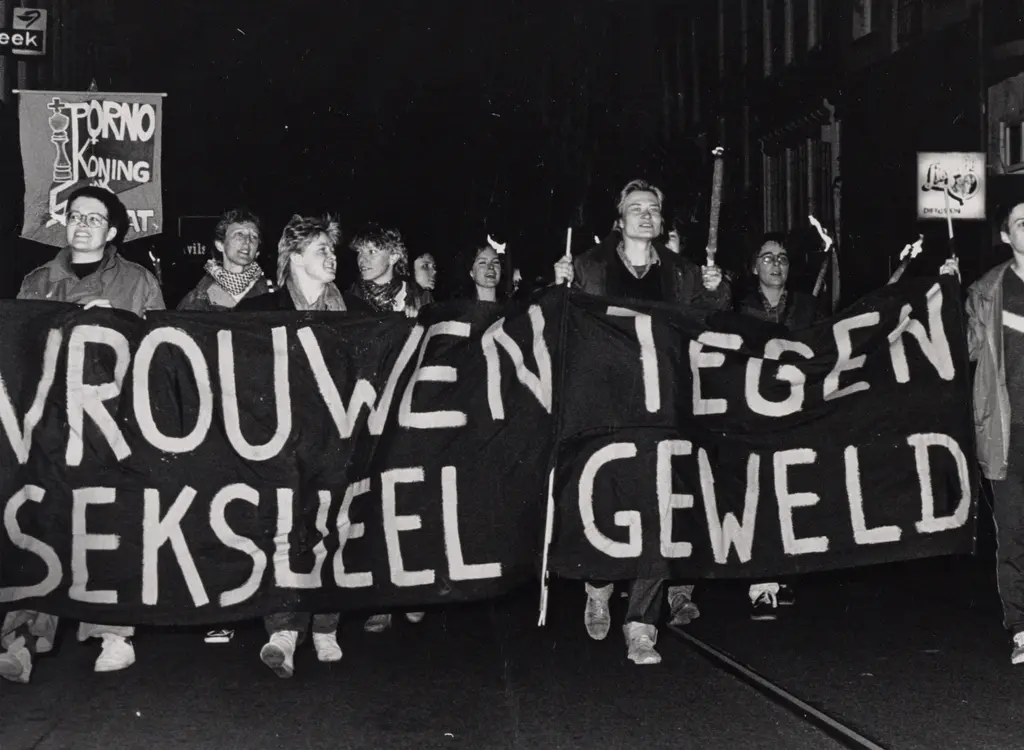
The same period also saw action against sexual violence and rape. In the late 1970s, several action groups emerged, such as Women Against Rape, Women Against Sexual Violence and Against Her Will. Women Against Porn considered pornography as an underlying source of sexual violence against women. These groups offered various forms of help to victims of sexual violence. They also took action on the streets, for instance during Witch Night.
For these groups, the government was not so much a source of money as the intended recipient of the protests. The movements felt that the government should crack down on rape, sexual assault and, later, pornography. With the politicisation of sexual violence in the 1970s, the women's movement unfolded as a primary actor in the political debate on legislation surrounding sexual violence. These organisations received sporadic subsidies in the 1980s, which they used for phone charges or rent. Thus, they had a less dependent relationship with the government than the structurally subsidised Stay off my body.
Kijkduin Conference
In 1982, state secretary Hedy d'Ancona, a feminist and social democrat, organised a "study conference" on violence against women. At this Kijkduin Conference, attendees positioned sexual and physical violence as a form of structural violence against women. D'Ancona argued that domestic violence is an issue of economic and sexual domination by men intertwined with the realisation of self-determination rights. An urgent call followed for the government to take action and include the issue in the gender equality policy. Therefore, those present drew up a new definition of violence against women in the Dutch context. The basis for this was the structural nature of this form of violence and the responsibility of the government to address this problem.
Supporting the women's movement
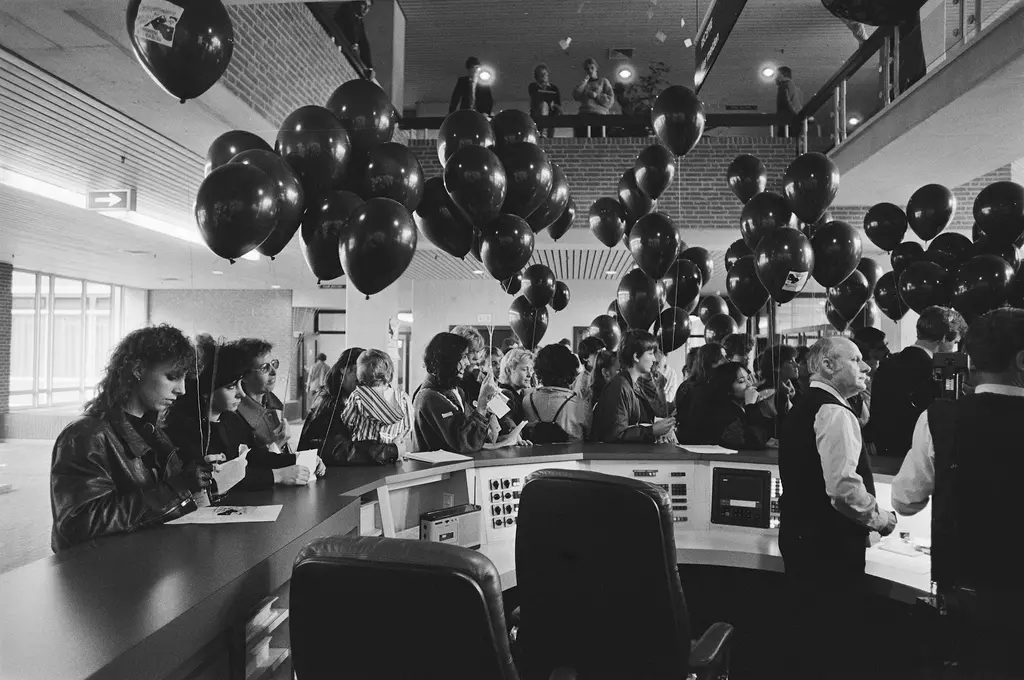
The Kijkduin Conference marks the beginning of a new era. Policy development during the 1980s focused on supporting victims of violence, prevention of violence, research and education on partner violence. The government also provided more grants to women's movements. This benefited the professionalisation and institutionalisation of the organisations. But it also meant that the government's influence on the movements increased. Despite this facilitating role of the government, the overall women's movements managed to retain some of their independence and contrarian character. Thus, political pressure from groups such as Women Against Sexual Violence bore fruit. The first national policy to combat sexual violence against women and girls appeared in 1984. Later, in 1991, marital rape was also criminalised.
Difficult times for stay-at-home centres
Yet in the late 1980s, shelters were decentralised and subsidies were cut. Policies to combat violence against women also became gender-neutral. The early 1990s was characterised by policies that ignored the gendered and structural nature of violence against women. This led to internal unrest at Stay Behind. Budget cuts made it difficult to campaign at the political level alongside social work. Moreover, given the declining attention to the women's movement, it became increasingly difficult to find volunteers for the shelters.
More and more women were also looking for paid work instead of volunteering. The organisation was forced to stop working with unpaid volunteers, professionalise and set up a hierarchical organisational structure. A way of working that had been resisted for years. It marked the end of Stay Behind as an action group. Many activists and women's shelters decided to distance themselves from the movement, in protest against encapsulation by the government.
The end of the women's movement?
Due to the strong dependent relationship with the government, most women's groups ceased to exist in the early 1990s. In 1999, the government introduced a new neoliberal policy plan for gender equality. This plan spoke of addressing "domestic violence" rather than gender-based violence. In it, any distinction between men and women was considered discriminatory. The earlier views of the Dutch women's movement were dismissed as "self-victimisation". However, the policy plan received little resistance from the women's movement. Instead of criticism, the extensive national network of women's organisations simply ceased to exist. Thus, disproportionate violence against women disappeared into the background.
Putting violence against women on the map together
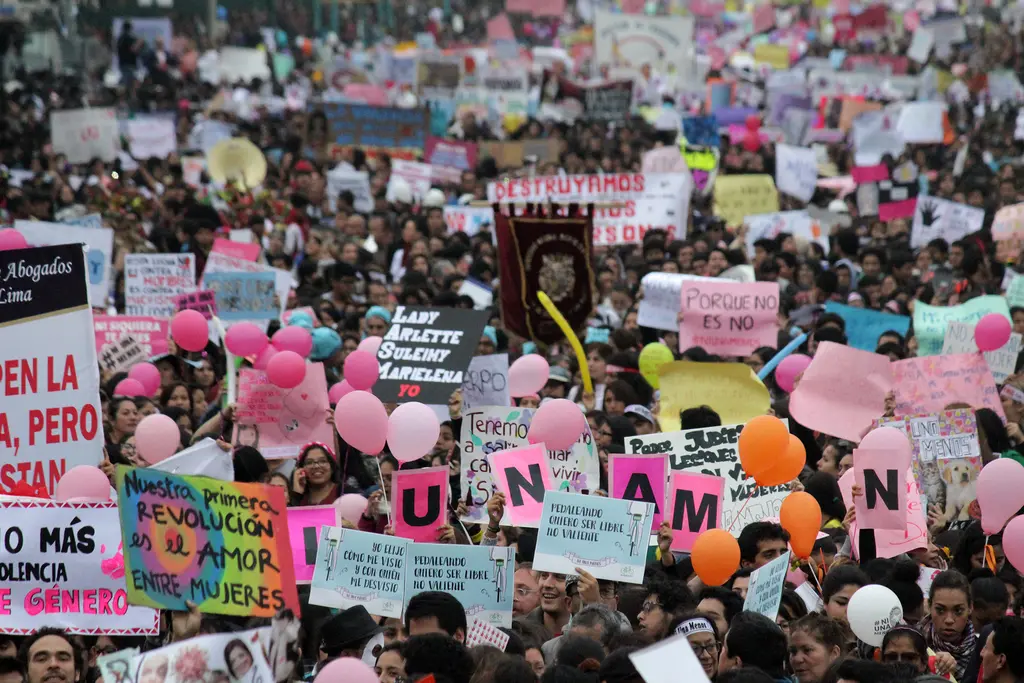
The Netherlands is still very much behind when it comes to tackling gender-based violence. While other countries have not stopped fighting violence against women, the Netherlands has paused for over 20 years. An important example is the fight against femicide. The Latin American movement #NiUnaMás began protesting against the many femicides in Ciudad Juárez in Mexico at the beginning of the 21st century. The feminist movement in Argentina adopted their name and adapted it to #NiUnaMenos. It was there that the first nationwide protest against femicide took place in 2015.
This international movement has since mobilised women around the world. Thanks in part to this attention, many Latin American countries have implemented femicide and gender-based violence into their laws and policies over the past two decades. But in the Netherlands, such violence remains an underestimated and ignored problem. To put this problem back on the map, we need to fuel the feminist movement in the Netherlands and put gender-based violence back on the political agenda.
Inclusive language
In the present context, the words women and girls in this article refer to people who identify as women, regardless of whether this was attributed to them at birth. In historical context, they mostly refer to people born with a womb.
Notes on the photo at the top of this article
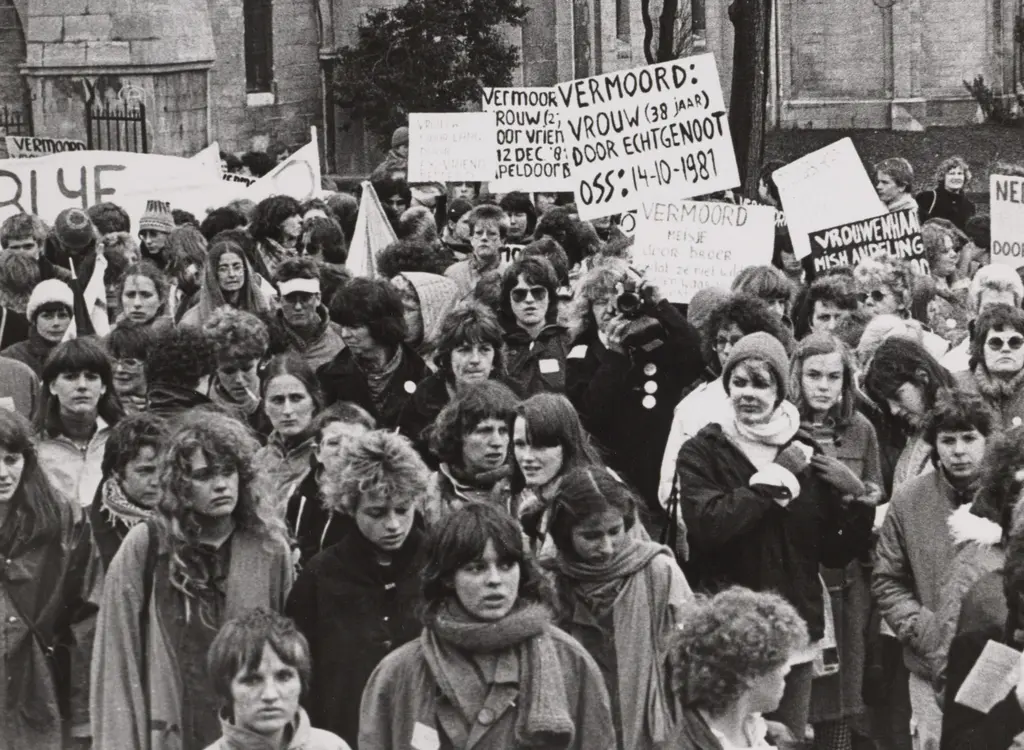
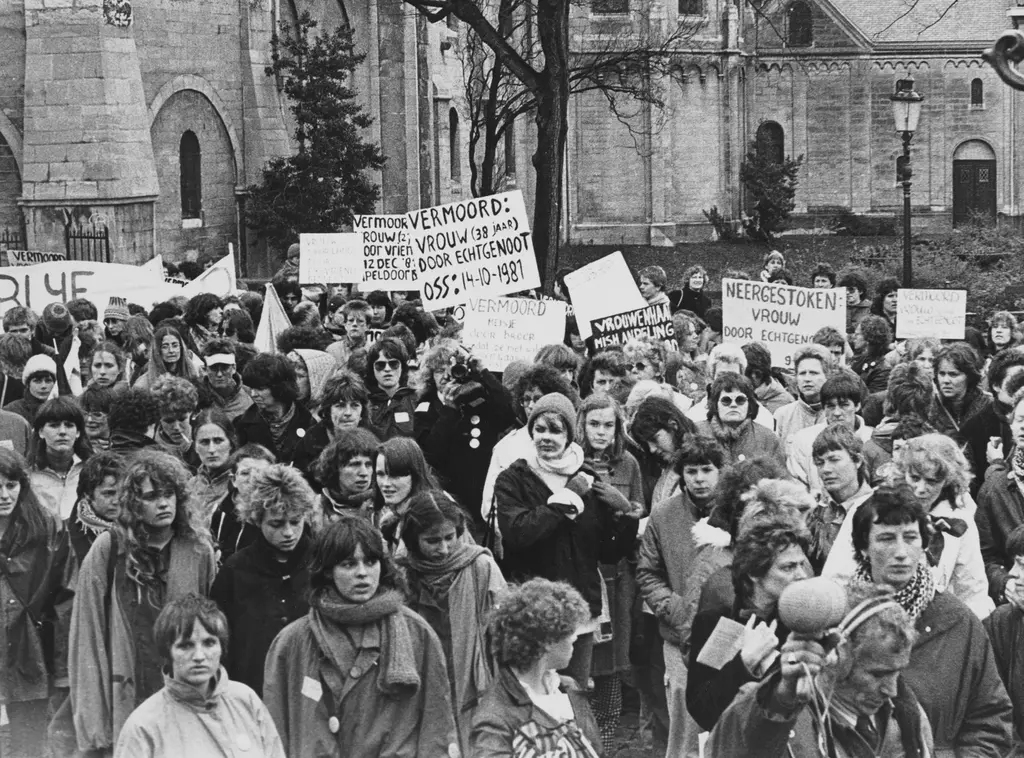
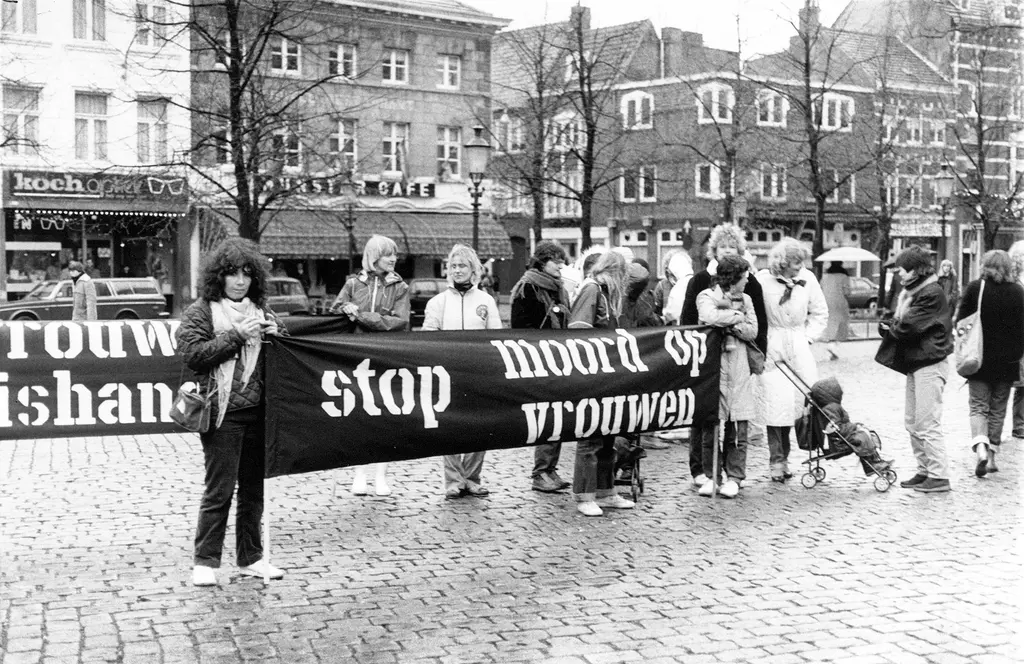
This is a demonstration that took place in Roermond on 8 April 1982. It was organised by Blijf van mijn Lijf Nijmegen and women from Roermond. In April 1982, a woman who had sought shelter at Blijf van mijn Lijf Nijmegen was murdered. Her ex-husband smashed her skull with an axe while she was waiting for the bus on her way to her children. On 8 April, the man stood trial in Roermond for this. Blijf van mijn Lijf Nijmegen therefore went to Roermond on 8 April to raise awareness of wife abuse and murder. The demonstrators walked through the city and made a lot of noise in front of the courthouse itself during the hearing. In the evening, there was a manifestation.