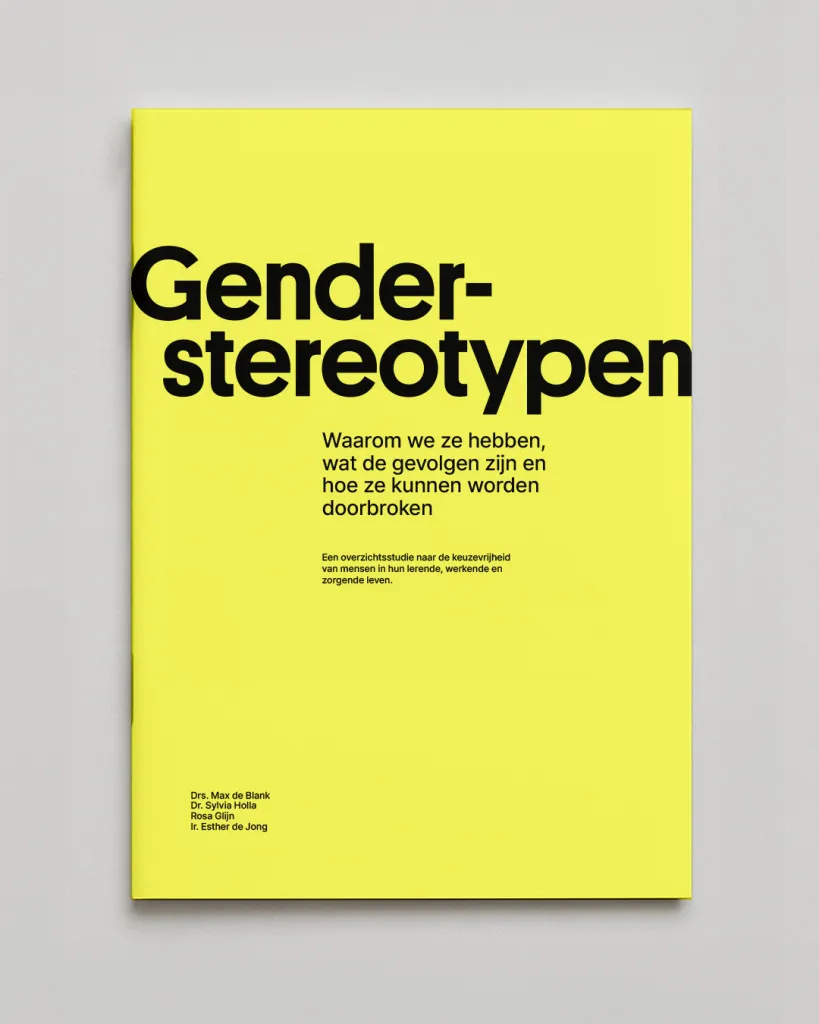
Gender stereotypes - stereotypical ideas of how men and women should behave - are the main cause of gender inequality. This study focuses on people who walk a 'counterstereotypical' life path. Consider, for example, firefighters' wives and stay-at-home dads. How did they arrive at these choices, and how do they sustain them? What are the challenges they face? And how do they deal with or overcome them?
Gender stereotypes - stereotypical ideas of how men and women should behave - are the main cause of gender inequality. This study focuses on people who walk a 'counterstereotypical' life path. Consider, for example, firefighters' wives and stay-at-home dads. How did they arrive at these choices, and how do they sustain them? What are the challenges they face? And how do they deal with or overcome them?
"I am very happy where I am now and where I am working now. It's not easy as a man in childcare, certain choices you make."
In the survey, Jason (male, 27) who works in childcare comes forward: "I also know a colleague who says 'I'm just not going to put too big on my LinkedIn that I work as a man in childcare'. Whereas I think: I just work there, done. In the workplace, there are a lot of women. I would like the children to see more diversity than fat, thin, big, small, from abroad, but also male, female. Definitely."
The above quote shows how difficult but also how important it is to have men working in childcare. It gives Jason satisfaction because it suits his interests and talent. It is complicated because there is a stigma on men who want to care. It matters because children get a more multifaceted image of 'the man': namely, as someone who cares.
Swimming against the tide
Jason's musing illustrates a central paradox in the report. On the one hand, there is a clear social need for diversity and inclusiveness, so that people can freely shape their working, learning and caring lives - even if this goes against established norms. On the other hand, people who make counterstereotypical choices, swimming against the current, encounter so many obstacles that the question arises how they manage to make and sustain these choices.
How do people make counterstereotypical choices in their learning, working and caring lives?
Are they headstrong, stubborn and non-conformist in character? Or do they have a social position that strengthens them to swim against the current? What resources do people following counterstereotypical life paths have to do so? This report seeks to answer these questions by looking specifically at individuals who fulfil counterstereotypical roles or functions in their learning, working and/or caring lives.