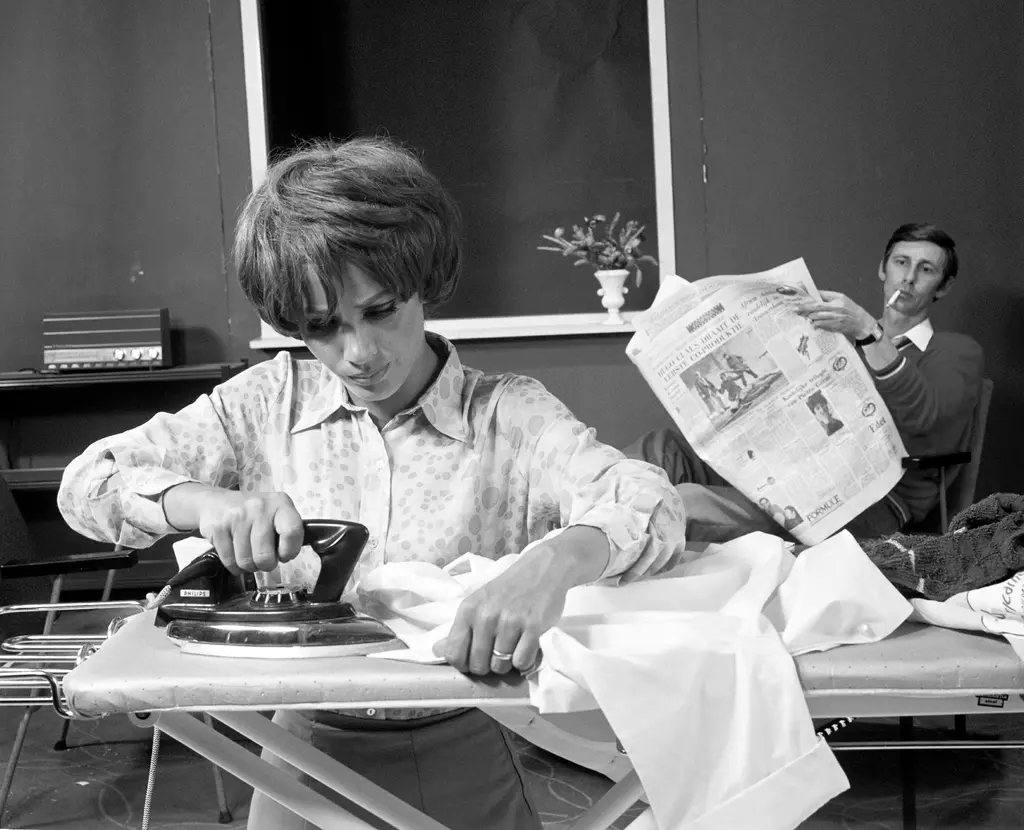
Misogyny is often described as hatred of women. It refers to negative, hostile or disparaging views and attitudes towards women and girls (in all their diversity). But misogyny encompasses more than just overt hatred or aversion towards women and, in this form, is not always easy to recognise. So how can you recognise misogyny? How does it differ from sexism? In this article, we take a look inside the ‘black box’ of misogyny to gain a better understanding of its various forms.
Misogyny is often described as hatred of women. It refers to negative, hostile or disparaging views and attitudes towards women and girls (in all their diversity). But misogyny encompasses more than just overt hatred or aversion towards women and, in this form, is not always easy to recognise. So how can you recognise misogyny? How does it differ from sexism? In this article, we take a look inside the ‘black box’ of misogyny to gain a better understanding of its various forms.
What is misogyny?
The Van Dale dictionary defines misogyny as ‘hatred of women’ (Van Dale online, 2026). The word ‘misogyny’ comes from Ancient Greek: miseo (μισέω = to hate) and gyne (γυνή = woman). But would a man who hits a woman say of himself that he hates (all) women? Perhaps he has a caring mother, a lovely daughter or a cool female colleague. Patriarchal gender norms are full of love for submissive women who serve men.
In Trump’s own words: ‘I have many female executives [working for me]. They do an excellent job. I pay them a huge salary. They make money for me.’ (Viebeck, 2015). At the same time, Trump undermines equal rights for women and regards them as property that he can do with as he pleases.
Misogyny has many faces and manifests itself in various spheres of society and our (daily) lives: online, in private life, in politics, in the media, in language, behaviour and imagery, but also in social norms, institutions and practices that structurally disadvantage women. Women of colour, women who belong to a (religious) minority, trans women and women who do not conform to traditional norms of femininity are more likely to face misogyny. For them, misogyny can also intersect with other forms of discrimination and stereotyping, causing various forms of exclusion to accumulate and reinforce one another. It can manifest itself in the belittling of women, the denial of their equality, the punishment of women who do not conform to traditional gender norms, or the justification of unequal treatment. ‘Victim blaming’ is one example of this. In victim blaming, responsibility is placed on the victim rather than on the perpetrator of the violence. A common line of reasoning here is that a woman herself is responsible for, or partly to blame for, inappropriate behaviour or (sexual) violence, for example because she is wearing a short skirt.
If misogyny is understood solely as hatred of women, almost no one appears to be misogynistic. But this fails to explain why women are systematically punished when they transgress traditional gender norms.
Misogyny as a mechanism of social control
According to contemporary feminist literature, we should therefore view misogyny not only as a personal opinion or attitude, but also as a social and structural mechanism that perpetuates women’s subordinate position and ensures that characteristics, behaviours and values considered ‘feminine’ are held in lower esteem. This is reflected, for example, in the punishment of women who do not conform to traditional gender norms, as well as of those who challenge these norms.
Misogyny manifests itself, amongst other things, in resistance to women in leadership positions, for example in the form of online hate directed at women in politics (such as the remark ‘Why don’t you go and peel some potatoes?’), but also in traditional media or during job interviews, where women are more frequently asked questions about their private lives or are judged and criticised on their appearance.
This sends the message that women are subordinate to men and do not belong in political or other positions of influence, or in public life. We also see this reflected in threats or intimidation directed at women who speak out publicly, and in attacks on individuals or organisations committed to gender equality. Research shows that women of colour face a compound effect of gender and racial prejudice within misogyny, meaning they are more frequently questioned and undermined in their professional roles, in politics and in other spheres. Misogyny plays a major role in the emerging anti-gender movement and in the manosphere, where it functions as a mechanism for upholding patriarchal (and heteronormative) norms. In the anti-gender movement, feminism, gender equality and LGBTI+ gender equality are portrayed as threats to traditional gender roles and family structures. Within the manosphere, feminism and women’s gender equality are presented as a threat to men’s position and status, whilst traditional gender relations are glorified.
Misogyny versus sexism
Professor Kate Manne distinguishes between misogyny and sexism: misogyny perpetuates, sexism justifies. Sexism is an ideology that presents male dominance over women as ‘natural’. Gender-stereotypical notions play an important role in this. For example, there is the idea that women are by nature more caring than men, whilst men are better equipped to be breadwinners.
Misogyny is, as it were, the aggressive overseer, guardian and enforcer of this ideology. According to this line of reasoning, as long as a woman remains obedient, subservient and caring, a man has absolutely no reason to hate women. But if a woman ‘doesn’t know her place’, the misogynist calls her to order. In other words, if a woman transgresses the patriarchal division of gender roles, the misogynist takes issue with it. This happens, for example, when women in political leadership roles are verbally abused, intimidated or not taken seriously.
Within misogynistic logic, a man who hits a woman must surely have a reason for doing so: she may well have provoked him (had she been unfaithful?), treated him unkindly (had she rejected him?), worn provocative outfits (was she trying to seduce him or other men?) or had selfish career plans (did she want to earn more than her husband?).
Click here to read the full article on misogyny.
Conclusion
The many faces of misogyny show that this phenomenon is not limited to hatred of women. Misogyny manifests itself in reactions to women who do not live or behave in accordance with traditional gender norms, in online harassment, in the ‘manosphere’ and in movements that portray gender gender equality as a threat.
Kate Manne’s perspective shows that misogyny acts as a mechanism for upholding patriarchal norms and for reining in women who challenge these norms. This helps us to recognise misogyny more effectively, including in less visible forms, such as within the anti-gender movement. It is high time that the Van Dale dictionary updated its definition of misogyny.