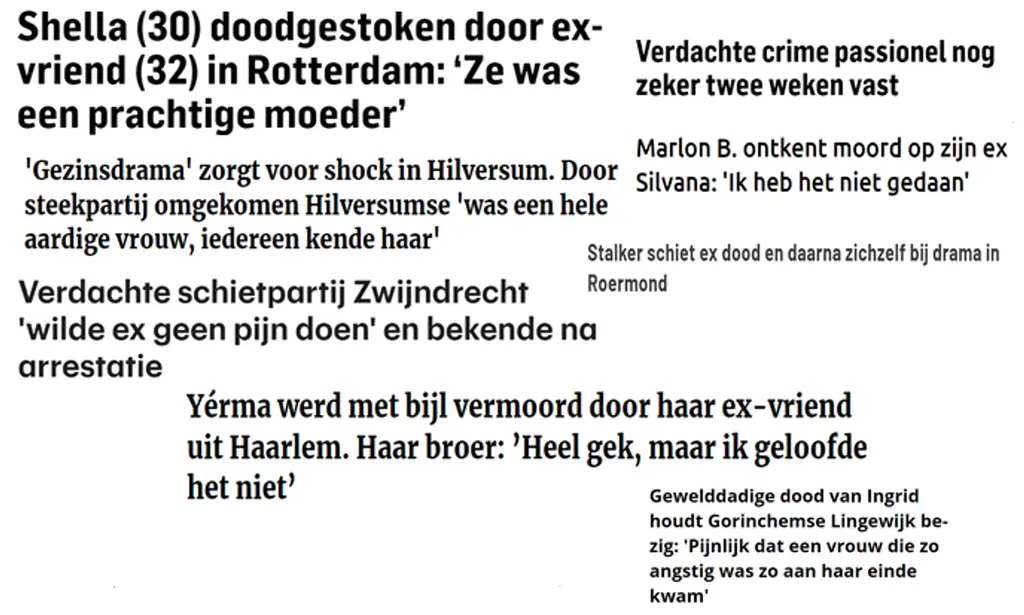
Since the murder of 17-year-old Lisa in August 2025, the term ‘femicide’ has become an integral part of public debate. Since then, we have seen cases of femicide featured more frequently in the news; the We Reclaim the Night campaign was everywhere; and during the 2025 parliamentary election campaign, the term was used by politicians across the political spectrum.
Since the murder of 17-year-old Lisa in August 2025, the term ‘femicide’ has become an integral part of public debate. Since then, we have seen cases of femicide featured more frequently in the news; the We Reclaim the Night campaign was everywhere; and during the 2025 parliamentary election campaign, the term was used by politicians across the political spectrum.
Whilst the left and centre view this as a structural social problem, the far right frames it as a migration issue. As a result, femicide becomes not only a subject of social debate, but also part of a broader political strategy in which anti-gender movements exploit gender-based violence* to bolster anti-immigration and conservative agendas.
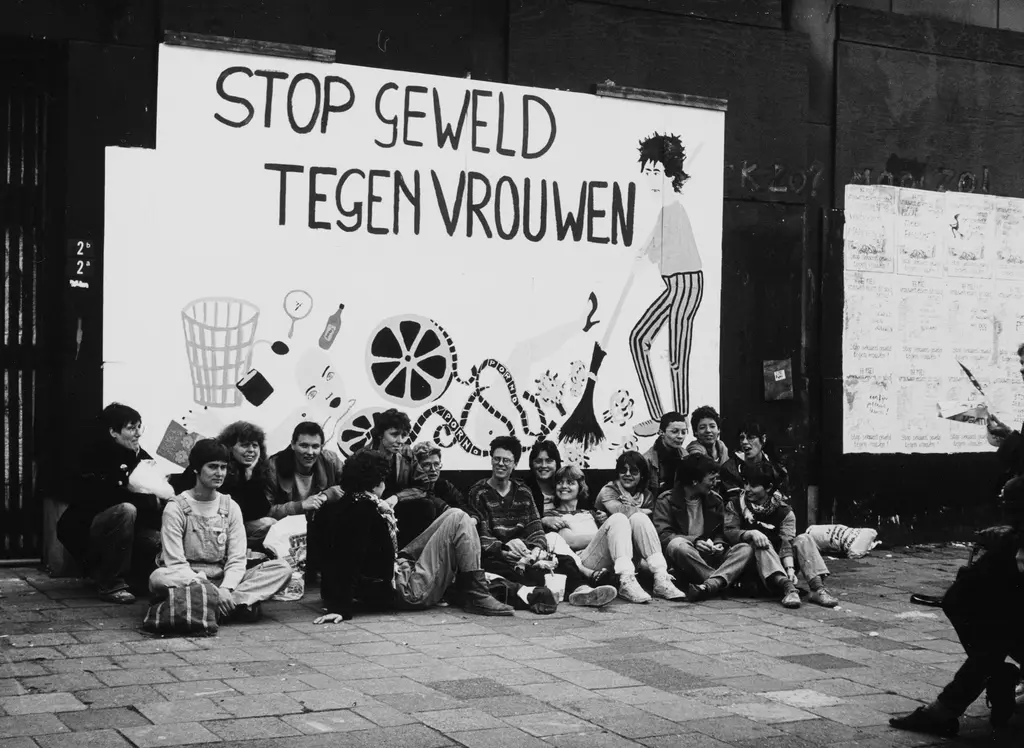
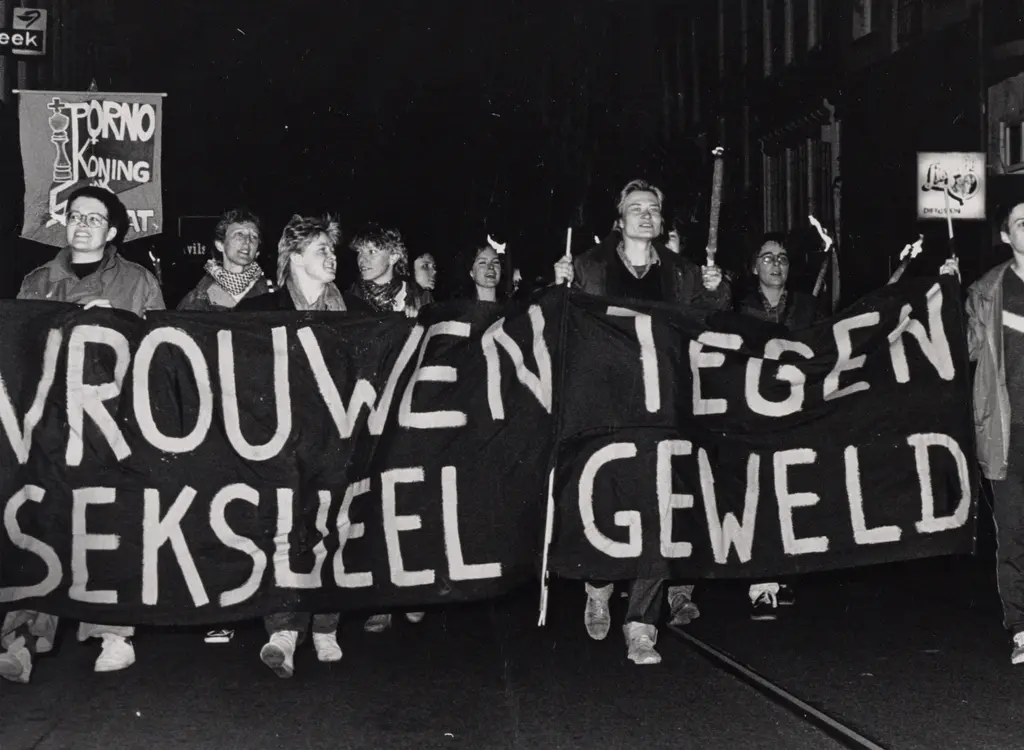
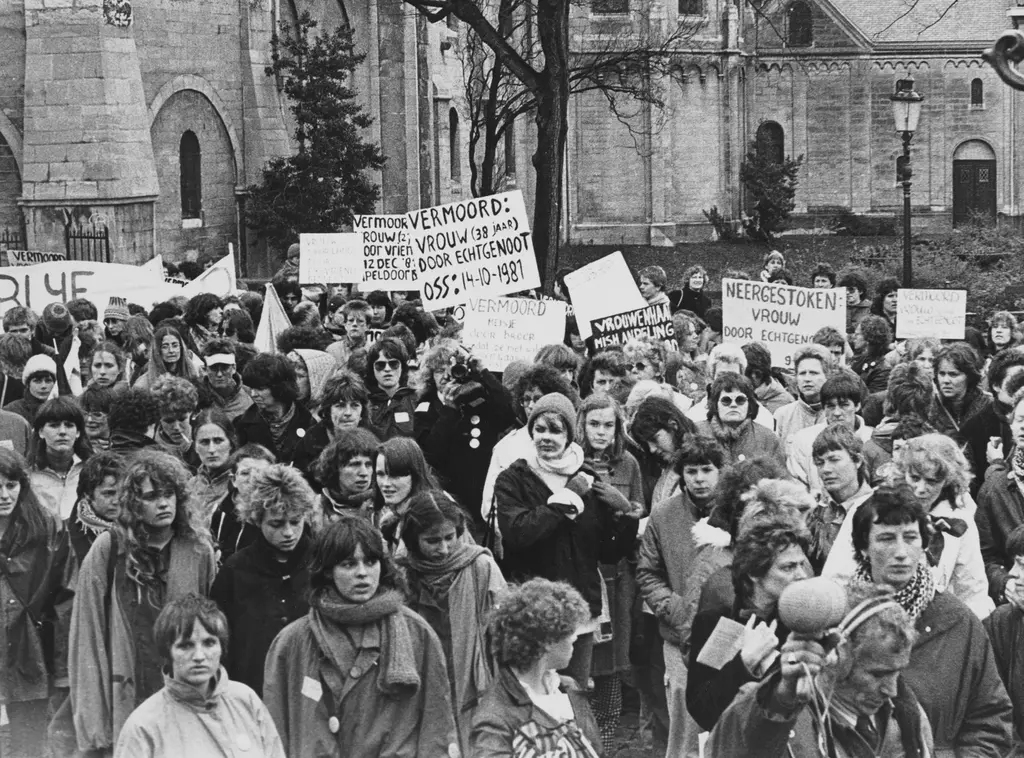
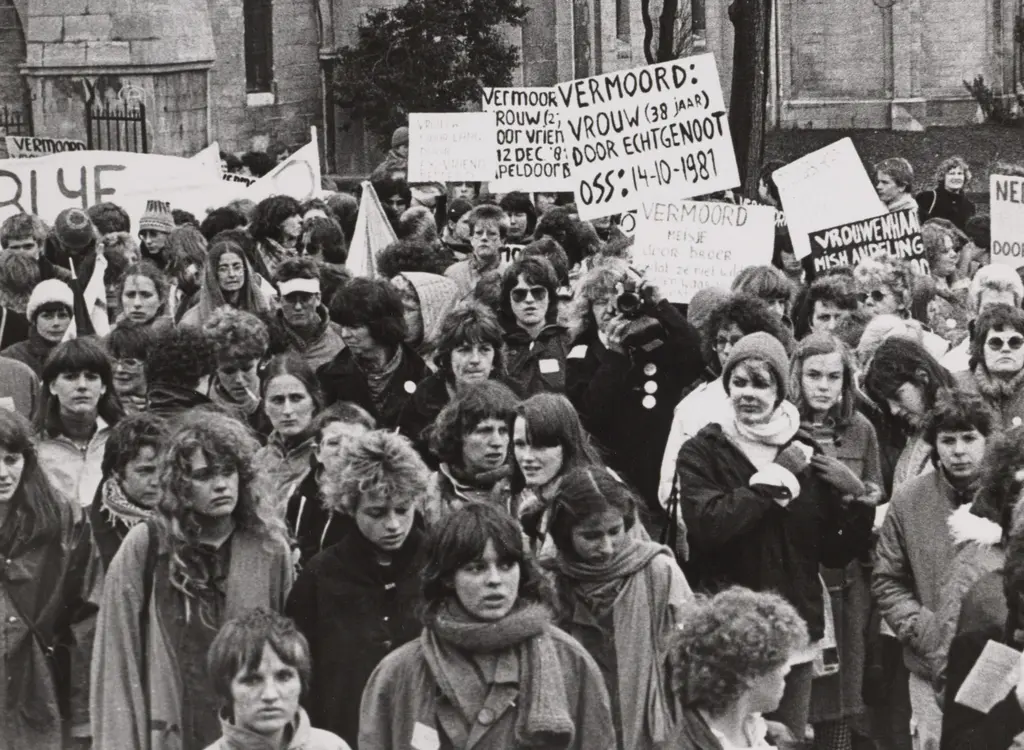
The discussion on femicide touches on broader questions concerning gender-based violence, feminist activism and the role of public policy in the Netherlands. Drawing on sources from the Atria collection, this article focuses on showing how, from the 1970s onwards, gender-based violence came to be seen increasingly clearly as a social issue. You will also read more about how feminist organisations, researchers and support workers played an important role in this.
*Gender-based violence is violence based on sex, gender or sexual orientation.
What is femicide?
Atria adopts the definition provided by the European Institute for Gender Equality (EIGE) and defines femicide as: the murder of a woman because of her gender. This definition was developed in collaboration with various experts in the field of gender-based violence, including Atria, for EIGE’s Gender Equality Glossary and Thesaurus.
Femicide is therefore not an isolated phenomenon, but part of a broader context of gender-based violence.
What do the figures show?
Figures from Statistics Netherlands (CBS) show that in a large proportion of femicide cases, the suspect is a (former) partner of the victim (CBS, 2022). The events leading up to femicide follow certain patterns and involve risk factors, but every case of femicide has its own personal story. The motives and forms of violence vary widely. The backgrounds of the victims also differ. Femicide occurs in a wide range of social, cultural and economic contexts and is not limited to any particular ethnicity, social class or religion. It occurs across all strata of society. There is no single, definitive profile of victims or perpetrators. Researchers therefore emphasise that gender-based violence is a widespread social phenomenon. Factors such as control, dependency, previous experiences of violence and unequal power relations often play a role.
Historical background: from a private problem to a social issue
When the first ‘Blijf-van-mijn-lijfhuis’ (women’s shelter) was established in Amsterdam in 1974, domestic violence was still largely regarded by the government and support organisations as a private matter. Legal protection for victims was limited and there was a lack of permanent shelter. The founders of the first ‘Blijf-van-mijn-lijf’ shelters wanted to change this. Out of the feminist movement emerged a new form of shelter centred on safety, independence and self-determination.
Following Amsterdam, shelters were established in Zwolle, Groningen and Nijmegen, amongst other places. Some locations started out in squats and were run largely by volunteers. Residents received support in finding work, achieving financial independence and securing accommodation. This shifted the focus from temporary shelter to long-term empowerment. Although forms of support had already existed prior to that time – for example, through monasteries or organisations such as FIOM and COM – these facilities focused primarily on temporary shelter and less on the social causes of violence.
Research and political change
A major turning point came in the early 1980s. In 1982, State Secretary Hedy d’Ancona, a feminist and social democrat, organised a conference on violence against women. Policymakers and politicians, academics and representatives of women’s organisations came together to share knowledge and ideas on the link between violence and power inequality. A year later, the first (provisional) policy document on combating violence against women and girls was published. In the years that followed, various policy measures were introduced, including:
criminalisation of marital rape
expanding legal protection measures
greater focus on domestic violence within the police, healthcare and the justice system
In 1992, sociologist and legal scholar Renée Römkens published a large-scale study on violence against women in the Netherlands. Among other things, it revealed that:
20% of Dutch women had experienced partner violence at some point
5% had been repeatedly subjected to violence
8% had experienced sexual violence within a relationship or marriage
The findings received widespread public and political attention.
Where do we stand now?
Since the 1970s, the approach to intimate partner violence has changed significantly. Women’s refuges have evolved into professional support organisations within broader networks of care, safety and social support. At the same time, gender-based violence remains an urgent social problem. According to recent analyses, domestic violence increased during and after the COVID-19 pandemic, whilst shelters are struggling with staff shortages and a growing demand for help.
The public debate on femicide has also changed. The term is now used more widely, but it also provokes debate. Some political movements, often linked to the anti-gender movement, misuse cultural or migration-related explanations for femicide, whilst researchers and support organisations point to structural patterns of gender inequality and violence that occur across all strata of society.
Furthermore, it is important to emphasise that not all victims have previously sought support from support services. Intimate partner violence often remains hidden due to shame, dependency, fear or social pressure. Moreover, femicide encompasses more than just intimate partner violence.
The role of Atria
Gender-based violence has been a key theme within Atria’s collection for decades. This is closely linked to the history of the feminist movements in the Netherlands, in which violence against women became a central political issue.
The collection contains hundreds of publications on domestic violence, femicide and sexual violence, ranging from academic studies to policy reports, leaflets and campaign materials.
In addition, Atria manages archives from, amongst others:
The Central Association of Organisations for Assistance to Unmarried Mothers (COM)
TransAct, centre of expertise for gender-specific care and sexual violence
These archives show how activists, social workers, researchers and policymakers have been working since the 1970s to secure recognition of gender-based violence as a social problem.
Conclusion
The terms ‘femicide’, ‘intimate partner violence ’ and ‘gender-based violence’ may seem self-evident today, but their social and political recognition has a long history. Feminist activists and organisations played a key role in this. The recent focus on femicide shows that the issue remains a pressing one. At the same time, researchers and aid organisations emphasise that the careful use of facts, historical context and statistics remains essential to ensuring a nuanced debate. Atria’s collection offers a rich source of material for this purpose, not only to understand the history of gender-based violence, but also to put contemporary discussions into perspective.